Bilthoven
Green commuter village of interwar villas in the pines, nine sprinter minutes from Utrecht Centraal and a gate into the Heuvelrug woods.
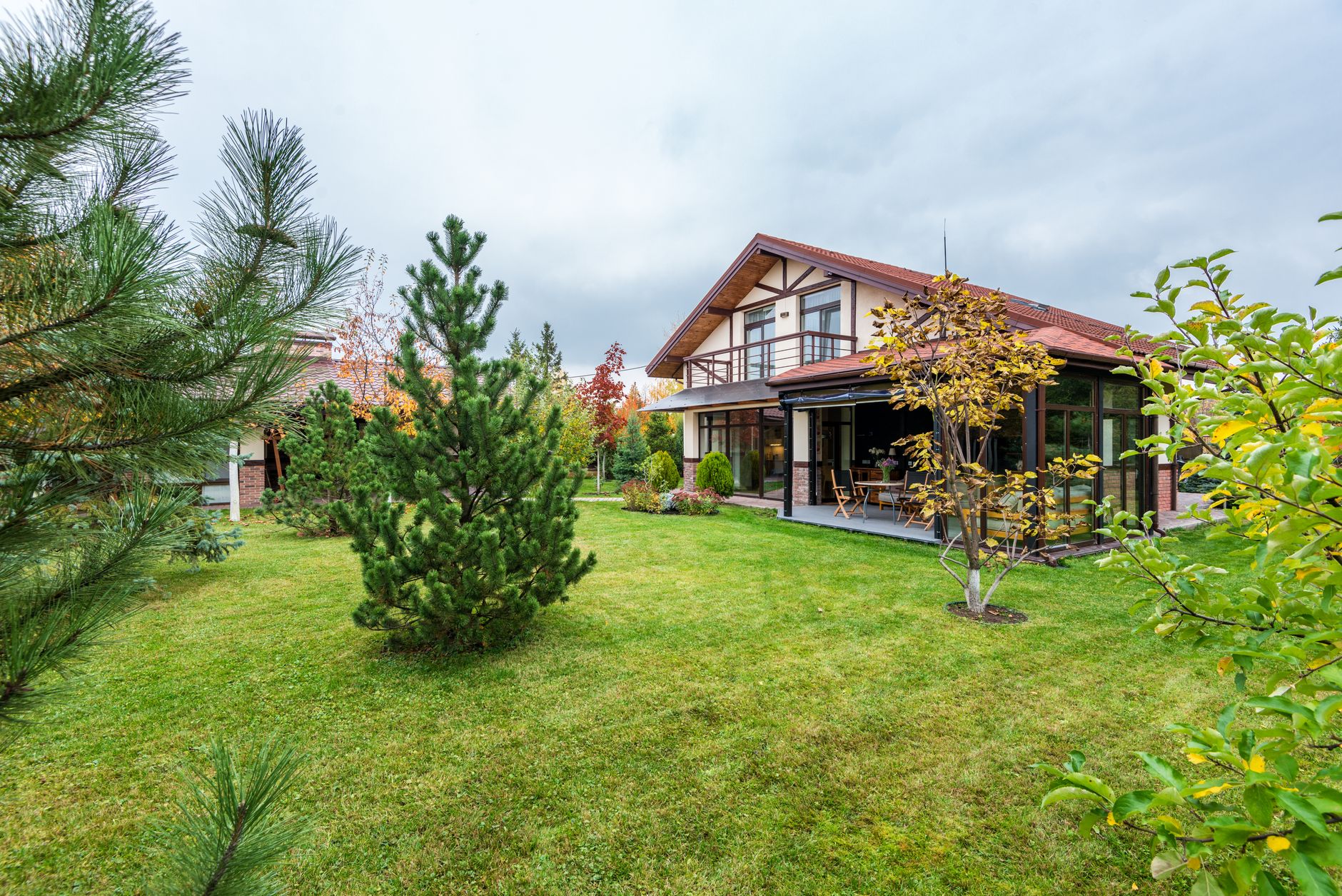 Brick villa with a thatched roof among pines on a sandy lane in Bilthoven
Why people stay in Bilthoven
Bilthoven was invented by the railway. The line from Utrecht to Amersfoort put a halt in the heathland in 1863, and by the 1920s the sand between the tracks and the Vuursche woods had been carved into curving lanes of thatched and gabled villas for Utrecht doctors and professors. That is still what it looks like: no old centre, no church square worth the name, but street after street of individual houses set back behind rhododendrons, with pine roots breaking through the pavement. It is the most consistently pleasant residential landscape in the province and a very easy place to sleep.
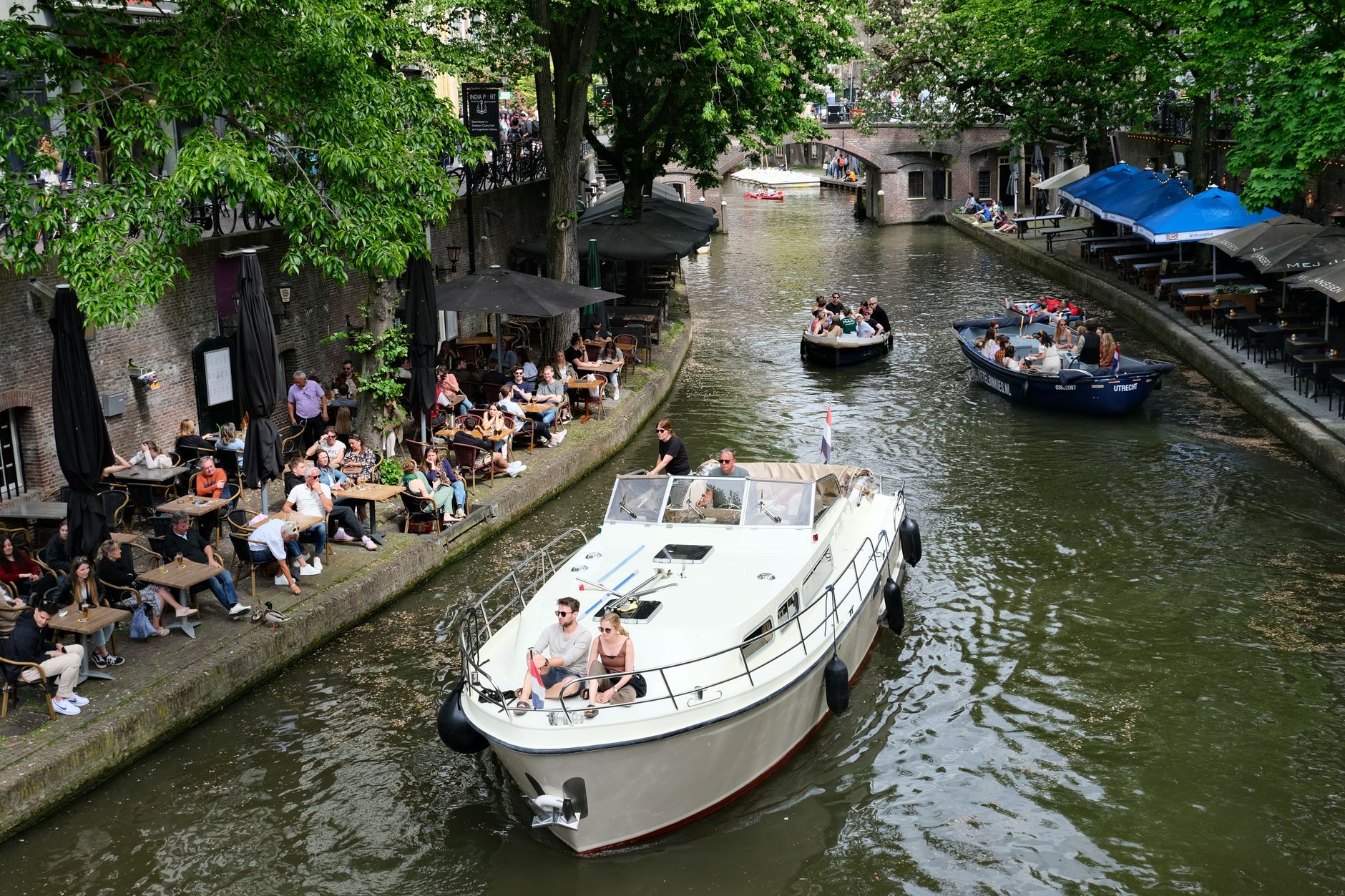
The functional heart is the station and the Kwinkelier, a rebuilt shopping precinct off the Julianalaan with a supermarket, a fishmonger, a couple of cafes and a decent cheese counter. It is not charming and nobody pretends otherwise. What it is, is nine minutes from Utrecht Centraal on the sprinter, four trains an hour, which means you can eat on the Oudegracht at eight and be back among the pines by half past ten. That combination — trains plus trees — is exactly why Bilthoven costs a little more than De Bilt next door.
Rooms are mostly small: bed and breakfasts in villa attics and garden annexes, €85 to €130 a night, plus a few larger properties towards Den Dolder. There is very little at the budget end and nothing at the luxury end. Book early for the last week of April and for summer weekends, when the woods fill with day trippers from Amsterdam. Evenings are quiet to the point of silence — a terrace near the station will serve until nine or ten, and after that the only sound is the level-crossing bell and the wind in the Scots pines.
This suits walkers, cyclists, families with small children who want a garden and a sandpit forest, and anyone commuting to the Utrecht Science Park or the RIVM campus. It does not suit anyone who wants to be able to change their mind about dinner at 10pm, and it does not suit anyone hoping for old-town photographs — for that, take the sprinter fourteen minutes the other way to Amersfoort, which has the medieval water gate Bilthoven never had.
The sweet spot is the wedge between the station, the Soestdijkseweg-Zuid and the Bilthovense Bos — streets like Boslaan, Jan Steenlaan and Julianalaan put you five minutes from a platform and five from a forest path. North of the tracks, around Park Brandenburg and the De Leijen quarter, is quieter and slightly cheaper but adds ten minutes of walking. Expect €85 to €130 for a double in a villa B&B, breakfast usually included and usually good; anything under €70 will be a room with shared facilities in a private house. Avoid places advertised as Bilthoven that sit on the Soestdijkseweg-Noord towards Den Dolder — the road carries steady traffic and the trees do not muffle it. Also check whether your host has bikes: without one, Bilthoven shrinks a great deal.
Things to do in Bilthoven
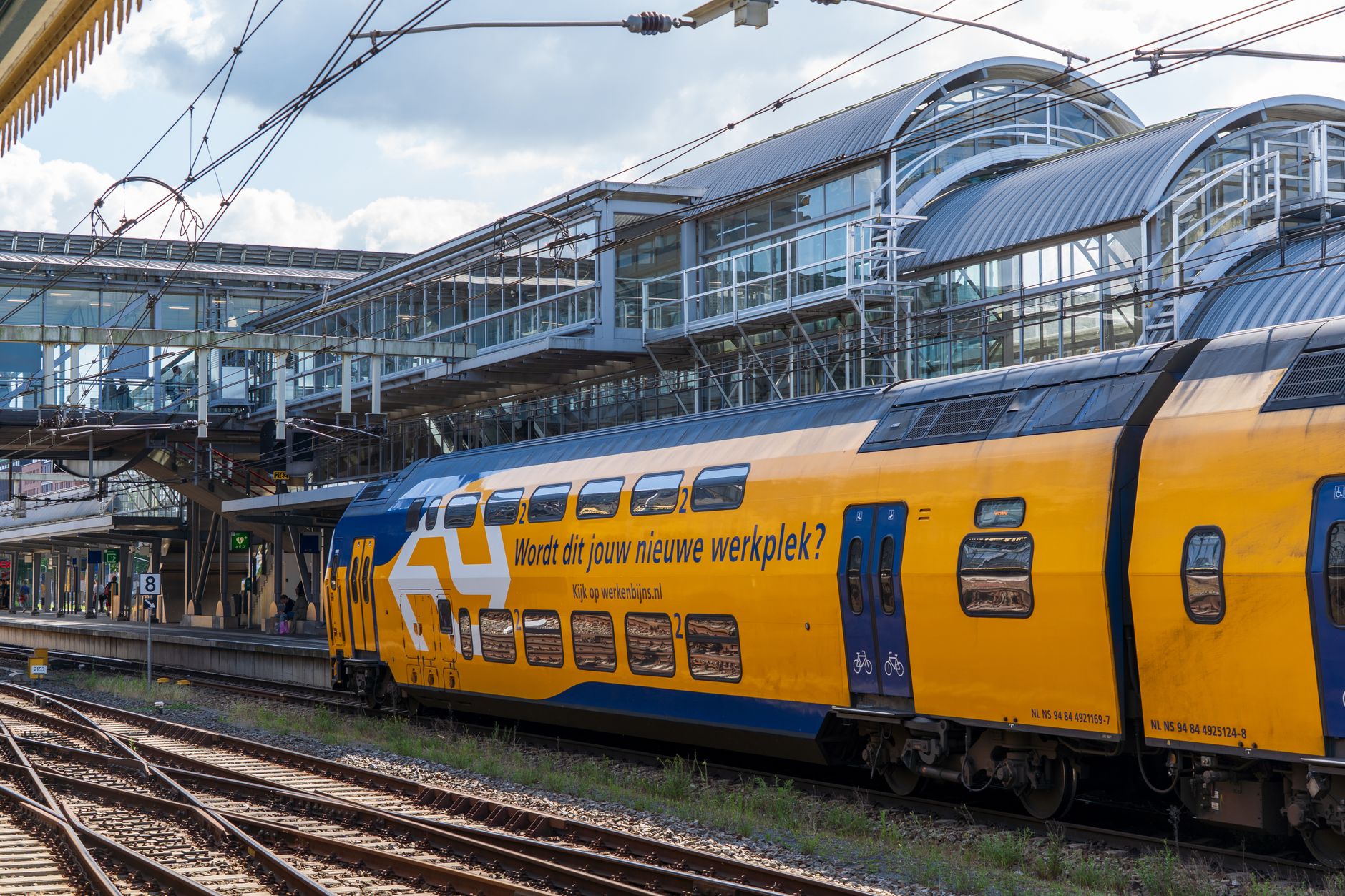
Bilthoven station is on the Utrecht–Amersfoort line, and Amersfoort Centraal is fourteen minutes away, four trains an hour. That buys you the Koppelpoort, the Muurhuizen wall houses and the Mondriaanhuis before lunch, and you can be back among the pines for an afternoon walk.
From the end of the Boslaan, sandy paths run south-east through pine plantation into the Panbos and onward to the Heuvelrug proper. Free, unfenced, and busy only on Sunday afternoons. Look for the wood-ant nests along the fire breaks — some are a metre high and decades old.

Twenty-five minutes north-west by bike through the Vuursche woods brings you to a village that exists largely to sell pancakes, at around €10 to €14 a plate, beside Drakensteyn castle. Go on a weekday; on Sundays the whole of the Randstad has the same idea.

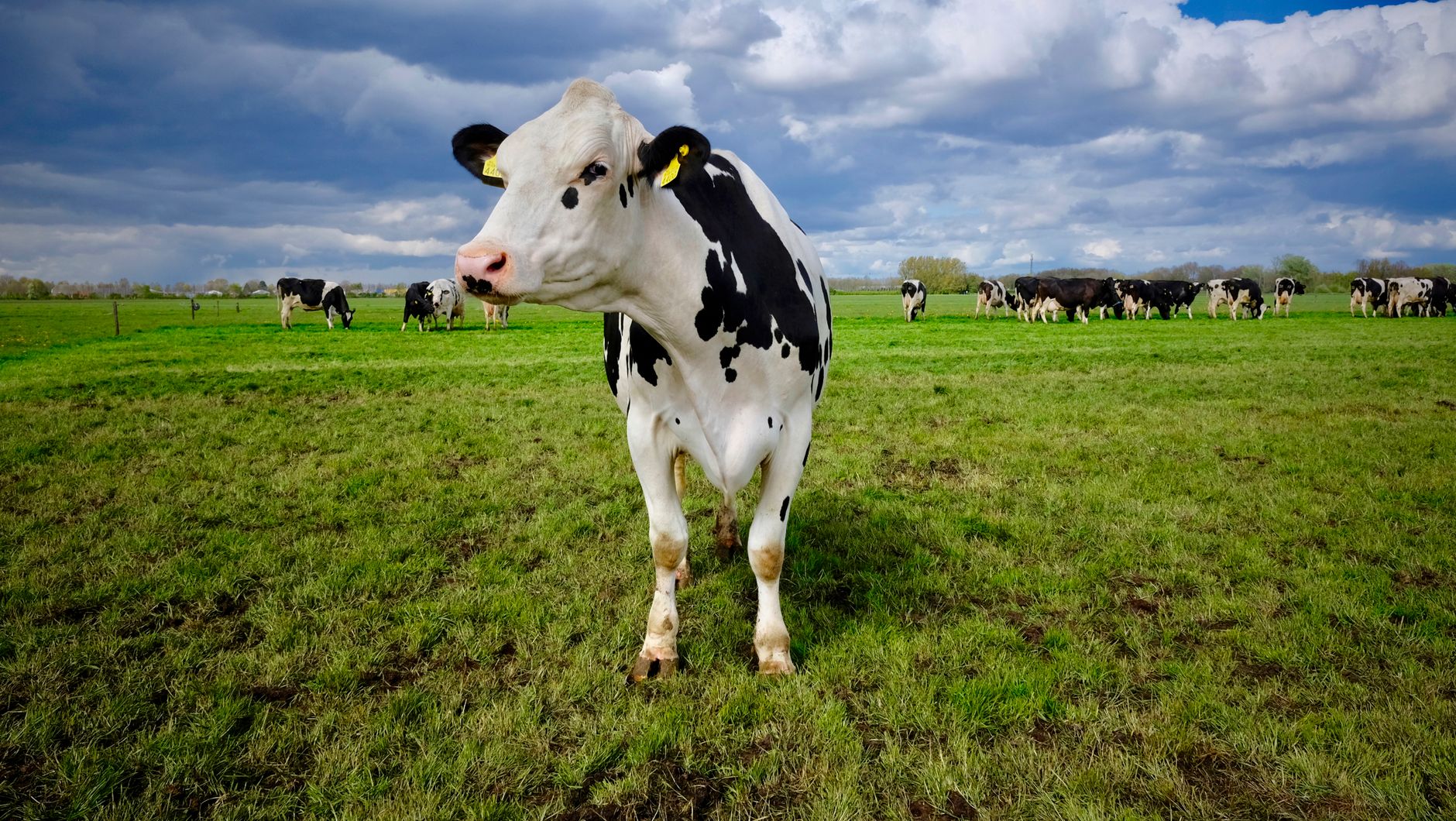
Landgoed Beerschoten, on the De Bilt side of the Soestdijkseweg, has an information point, a playground, grazing land and a network of easy gravel loops. It is the best place locally to explain to children what a country estate was for, and it links straight into Houdringe and Sandwijck.

Fifteen kilometres north-east, on the site of the old air base, the Nationaal Militair Museum sits under a vast hangar roof with an open airfield park around it. The ride crosses heath and pine the whole way; entry is around €18, and the runway itself is now a nature area.

Unglamorous but honest: the rebuilt precinct off the Julianalaan has a serious cheese counter, a fishmonger doing kibbeling on Fridays, and terraces where the whole village passes at some point on a Saturday morning. Everything shuts by six, so do the shopping first.
What to see
Hotels near Bilthoven
No hotels are listed in Bilthoven yet. The nearest ones are on the region page.
Every hotel we cover in Bilthoven
- Hotel 't Koningsbed 3★ · 4.7/5
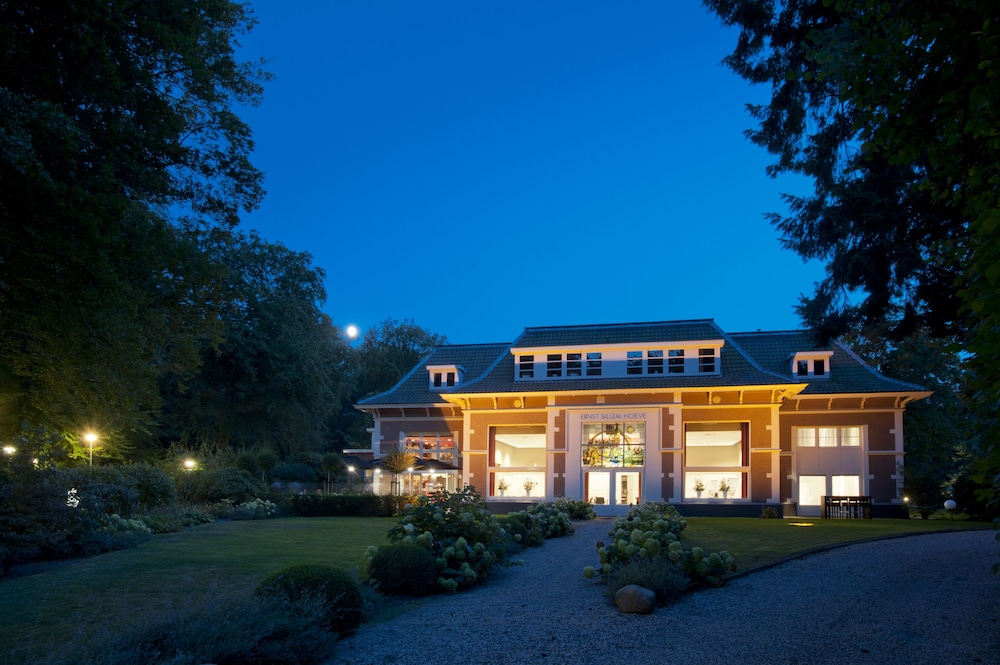
- Hotel Ernst Sillem Hoeve 4★ · 4.4/5
- De Kastanjehof 3★ · 4.2/5
- Puur Lage Vuursche 2★ · 3.9/5
- The Pool House 4★
- B&B Overbosch 3★
- Bubbles & Bed 3★
- Cavalli’s Cottage 3★
- Gastenverblijf in het voorhuis van onze woonboerderij 3★
- Studio Bosrijk Bilthoven 3★
- B&B 't Maartensdijkse Bos
- Résidence Lage Vuursche
- Uniek Houten Huis Nabij Bos En Plassen
Getting around Bilthoven
From Schiphol, train to Utrecht Centraal (about 35 minutes) then the sprinter towards Amersfoort — Bilthoven is the second stop, nine minutes, four an hour, roughly €3.50. Coming from the north or east, Amersfoort Centraal is fourteen minutes away on the same line. Bus 77 links the station to De Bilt village and back to Utrecht Centraal for when engineering works close the track. Within Bilthoven, cycle: the village is spread over four kilometres of lanes and the forest access points are on the outer edges. Bike hire is available at the station; parking is free in most residential streets and paid near the Kwinkelier.
Questions about Bilthoven
Nine minutes on the sprinter, with four departures an hour for most of the day and two in the late evening. The last trains back run past midnight, which is what makes Bilthoven workable as a base for city evenings. A single costs about €3.50; contactless bank cards work on the gates.
Very. The forest starts at the end of most streets, the Beerschoten estate has a playground and grazing animals, and traffic in the villa lanes is minimal. There is little in the way of formal attractions, so bring bikes or hire them. Rainy days mean the sprinter to Utrecht or Amersfoort, both under fifteen minutes.
Not by train. Cycle south-west through the estates in about twenty minutes, or take bus 77 towards Utrecht and change. Most people at the campus who live out here ride, because the route through Houdringe and Oostbroek is almost entirely off-road and quicker than it looks on a map.
Not a great deal, and that is the point. A handful of restaurants near the Kwinkelier and the Julianalaan serve until about nine or ten, and there is a small cultural programme at the local centre. For a real evening, take the nine-minute train into Utrecht or the twenty-minute bus to the terraces on Zusterplein in Zeist.