Cycling in Utrecht: the rules tourists break, and what it costs
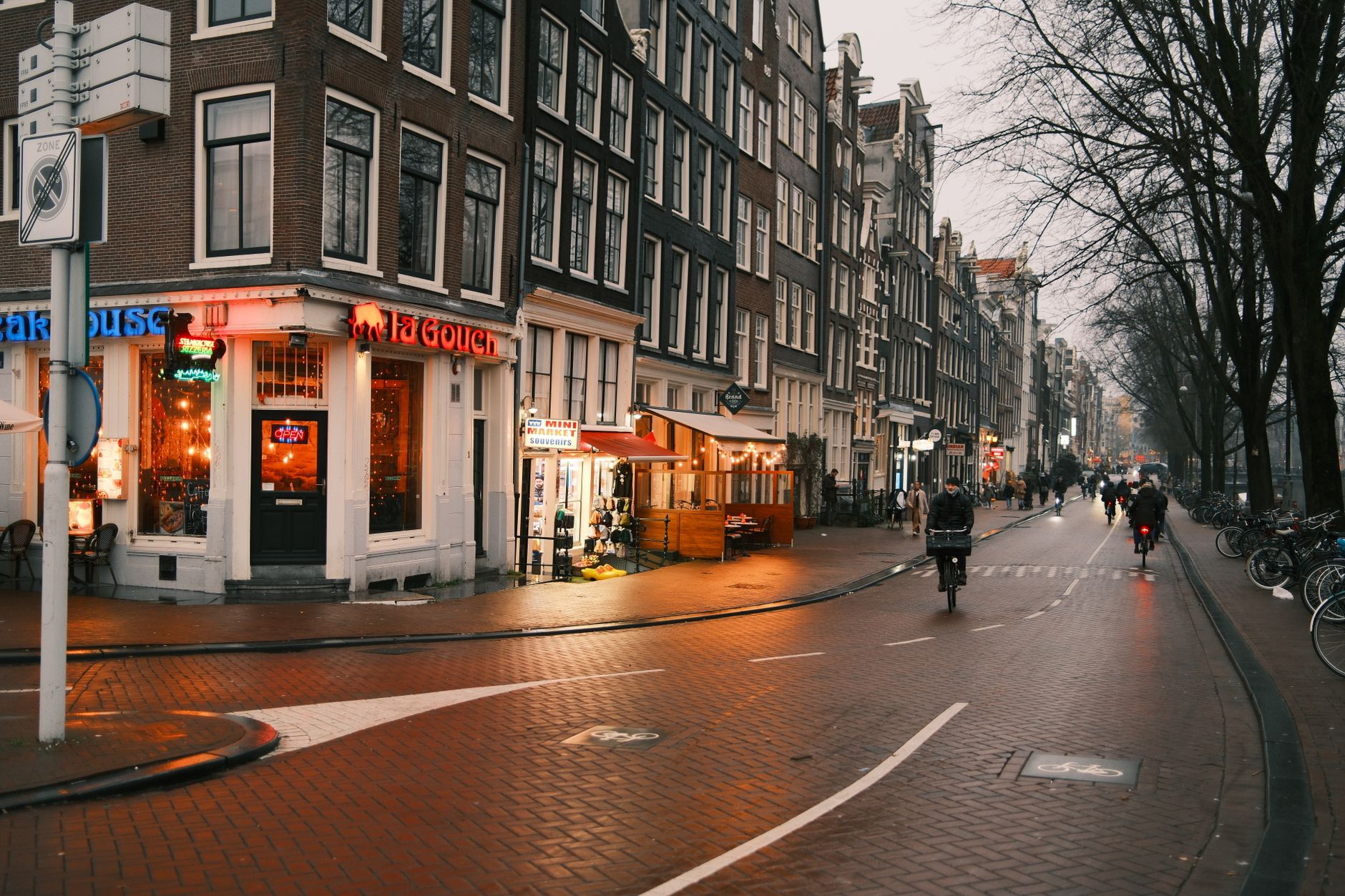 Cyclists on a red asphalt bike lane beside a canal in Utrecht at dusk
The red asphalt is a road, not a pavement, and the 6 mistakes below are the ones that get visitors shouted at, fined or clamped in Utrecht.
The short answer: red asphalt means get out of it
If the surface is reddish-brown asphalt, it is a bicycle carriageway and you should not be standing on it. This is the single biggest source of friction between visitors and locals in Utrecht, a city where cycling is not a leisure activity but the way roughly half the population gets to work and school. Cyclists here move at 18 to 25 km an hour, in dense platoons, with cargo bikes and e-bikes among them, and they do not expect a pedestrian to step sideways off the kerb without looking. The bell you hear is a warning, not an insult.
The corollary matters just as much when you are the one riding. Once you are on a bike here you are traffic, subject to the same road rules as a car, and Utrecht's cyclists will assume you behave predictably. That means holding your line, not braking suddenly to photograph the Oudegracht, signalling turns with an outstretched arm, and staying right so faster riders can pass on your left. Do those four things and you will blend in completely. Ignore them and you will spend your ride being overtaken with visible impatience at every junction.
Who gives way to whom
Three rules cover almost everything. Traffic coming from your right has priority on unmarked junctions, which feels wrong to visitors from countries where the bigger road always wins. Triangular white markings painted across the road, the so-called shark's teeth, mean you must give way to traffic on the road you are joining. And trams have priority over everyone, always, including where a cycle lane crosses the tracks near Utrecht Centraal and along the Science Park line. Roundabouts vary: on some the cycle ring has priority, on others it does not, and the shark's teeth tell you which.
Two Utrecht-specific hazards are worth naming. Tram and rail crossings have grooved rails that will grab a narrow tyre, so cross them as close to a right angle as you can, especially in the wet. And the wharf-level canal streets along the Oudegracht mix pedestrians, restaurant terraces, delivery traffic and cyclists in a space with no railings and a drop into the water. Ride the upper street rather than the wharf, and if you must walk the wharf at night, watch the unlit steps down from the street; they are steep, stone and centuries old.
Lights, phones and the fines that follow
Two offences are enforced here and both are traps for visitors. Riding after dark without a white front light and a red rear light is illegal, and police run targeted checks on autumn and winter evenings around the station and the university routes; a fixed penalty in the region of €70 to €80 has been typical. Holding a phone while riding is also prohibited, with a fine that has sat in the low hundreds of euros. Amounts are set nationally and are revised upward most years, so treat these as bands and check the current tariff if you want the exact figure.
The practical fixes are easy. When you hire, physically check that both lights work before leaving the shop, and ask whether they are battery units you must switch on or dynamo lights that run automatically. If you need directions, stop at the kerb, get both feet down, then look at your phone; mounting it on the handlebars and glancing at it while moving is the grey area locals exploit and visitors get caught in. Alcohol limits apply to cyclists too, which is worth knowing before you ride home from a terrace on Neude on a summer evening.
Where to park, and how bikes get taken away
Utrecht removes badly parked bikes, and it is not a rare occurrence. In the busiest parts of the centre and around the station, bikes must go in racks or in a designated garage, and anything chained to a railing, a bridge, a tree or a lamppost in a marked no-parking area can be clipped and carted off to the municipal bike depot. Getting it back means finding the depot on the edge of town, proving the bike is yours, and paying a release fee that has generally sat in the region of €25 to €30, plus storage per day.
If the bike is a rental, that becomes the rental shop's problem and then your bill, so use the infrastructure. The Stationsplein garage under the square has around 12,500 spaces and is typically free for the first 24 hours; there are smaller guarded garages near Vredenburg and Neude, and free racks all over the residential streets. Always lock through the frame to something fixed, not just the wheel lock, because Utrecht has a real bike theft problem: a student city with 60,000-plus students moves a lot of stolen bikes. Never leave anything in the front basket.
Hiring: what to get and what it costs
Expect roughly €10 to €15 a day for a basic upright city bike with a lock from a commercial rental shop, with weekly rates working out cheaper per day, and a card deposit or hold. E-bikes run higher, often double, and are unnecessary in a city as flat as this one; save the money unless you have a knee problem or are heading up onto the Heuvelrug ridge. Cargo bikes, the bakfiets you see everywhere with two children in the front box, can be hired too and are the cheapest way to move a family around for a day.
The national station rental scheme is cheap but practically closed to visitors, since it needs a Dutch bank account and a personal travel card, so plan on a shop. Book ahead for sunny weekends from April to September, when rental stock near the station genuinely runs out by mid-morning. Ask for a bike that fits: Dutch frames are built for tall riders and a saddle you cannot lower far enough will ruin a day. Test the brakes in the shop, especially if you are handed a coaster-brake bike where you pedal backwards to stop, which surprises a lot of visitors.
The unwritten social code
Nobody wears a helmet, and you will not be judged for wearing one, but you will look like a tourist. Nobody wears cycling clothing to ride to dinner. Two abreast is legal and normal, and a group of four spread across a lane is not, so break into pairs when someone wants past. Do not ring the bell aggressively at pedestrians; one short ping is a courtesy, a sustained trill is a rebuke. Overtake on the left, and if you are being overtaken by an e-bike or a delivery rider, hold your line rather than swerving right.
At red lights, cyclists stop, and they stop at the marked line, packed shoulder to shoulder. Filtering to the front through the pack is normal; jumping the light in front of a tram is not. Right turns on red are permitted only where a small sign says so, and that sign is worth learning. Finally, do not stop dead on a bridge or at the top of a ramp to take a photograph; pull fully off the cycle lane onto a pavement. Ninety percent of visitor conflict here comes down to stopping in the wrong place.
Routes for a nervous first ride
Do not start in the middle of the Binnenstad at 17:30. Start on the Singel, the moat-side park loop that rings the old centre: it is almost entirely traffic-free, roughly 5 to 6 kilometres around, and gives you a full lap of the city with the Museumkwartier, Wilhelminapark side and station edge all on the way. Once that feels comfortable, ride out east through Utrecht Oost to the Kromme Rijn path and on toward Bunnik, which is flat, green and quiet, or north through Tuindorp to the Vecht.
The routes I would avoid on day one: Vredenburg and the streets immediately around Utrecht Centraal, where cycle flows meet buses, trams and confused pedestrians; the narrow wharf streets along the Oudegracht at terrace time; and Adriaan van Ostadelaan and the other student arteries at 08:30 on a weekday, when the platoons are 40 riders deep. For a longer day, the ride to Wijk bij Duurstede along the river is 25 to 30 kilometres each way on excellent signed paths, and the ridge climb up to Doorn is the closest thing this region has to a hill.
Before you book
The questions people ask about Utrecht, answered with this month’s numbers.
No, helmets are not legally required for ordinary bikes and almost nobody wears one. They are sensible on an e-bike or with children in a cargo box. Rental shops may charge a few euros extra for a helmet and often have limited sizes, so ask when booking rather than on the day.
Removed bikes go to the municipal depot on the edge of the city, where you prove ownership and pay a release fee that has typically been around €25 to €30 plus daily storage. Check the current fee and depot address on the municipality's website, and tell the rental shop immediately if it is a hired bike.
You can ride the upper streets beside the Oudegracht and Nieuwegracht, and it is one of the best short rides in the country. Avoid the lower wharf level, which is packed with terraces, delivery vans and pedestrians and has an unfenced drop into the water.
Yes, with working lights, which are a legal requirement enforced by police checks. The main lit routes and the Singel loop stay busy until late. Lock through the frame wherever you stop, since bike theft is the city's most common crime and a badly locked rental is gone in minutes.