Walking from Utrecht to Amersfoort in two days
 Sandy footpath through pines and heather on the Utrechtse Heuvelrug ridge between Zeist and Soest
A 40 km two-day walk from the Oudegracht to the Koppelpoort, over the only hills in the province, with a 15-minute train home at the end.
The walk in numbers, and why this direction
Utrecht to Amersfoort is about 40 km on foot if you route through Amelisweerd, Bunnik, Zeist, Den Dolder and Soest — near enough 18 km on day one and 22 on day two, six and seven hours of actual walking. It crosses the Utrechtse Heuvelrug, a glacial push moraine that tops out around 50-60 m, which qualifies as mountainous by Dutch standards and gives you genuine sandy pine-and-heather country in the middle of the country's most urban province.
Walk west to east, city to town, for three reasons. You get the dull suburban kilometres out of the way while you are fresh; you finish at Amersfoort's Koppelpoort, one of the best-looking medieval gates in the Netherlands, which is a far better reward than arriving at Utrecht Centraal's shopping mall; and the train home takes 15 minutes and costs single-figure euros, so the logistics collapse to nothing. Trains run several times an hour, though evening and Sunday frequencies drop — check the operator before you plan a late finish.
Day 1, 09:00-11:30: out of the city along the Kromme Rijn
Start at the Oudegracht, walk southeast to Ledig Erf and pick up the water at Tolsteegbrug. Follow the Kromme Rijn out past the Rotsoord industrial pocket — a good coffee stop before the shops end — and under the ring road. By 10:00 you are on a green corridor with the river on your right, and by 10:30 you are in Amelisweerd, an 18th-century estate wood of beech avenues and oxbow ponds that the city fought hard to keep. Underfoot: gravel and packed earth, flat, well-signed.
Aim to reach the Rhijnauwen tea house around 11:15. It is an institution: pancakes at €9-14, terrace tables under enormous trees, and usually a queue of cyclists. Take the second breakfast here rather than lunch, because the next good stop is Zeist and you want to arrive there hungry, not stuffed. Just north lies Fort bij Rijnauwen, the largest fort of the water defence lines at around 27 hectares — interior access is by booked guided tour only, but the perimeter path adds a pleasant 30 minutes if you are ahead of schedule.
Day 1, 11:30-16:00: Bunnik to Zeist, and the first real slope
From Rhijnauwen it is 3 km to Bunnik, your bail-out point — a station with frequent trains back to Utrecht if the weather has turned or someone's boots are wrong. Push on north across the A12 and the land begins to tilt for the first time all day. The route climbs gently through the estate woods on Zeist's southern side, past parkland belonging to old country houses, and drops into Zeist at Slot Zeist, a 1680s baroque palace with formal gardens open to walk through and a courtyard café.
You should be there by 15:00, having covered 16 km. Zeist's centre is unremarkable — a pedestrianised shopping street — but it has everything you need: pharmacies, a supermarket for tomorrow's lunch at €6-9, and restaurants in the €15-25 range. Walk the last kilometre out to your bed rather than taking a bus, so day two starts from the right place. If your feet are complaining after 18 km on the flat, take that seriously: tomorrow is longer and sandier.
Where to sleep in Zeist
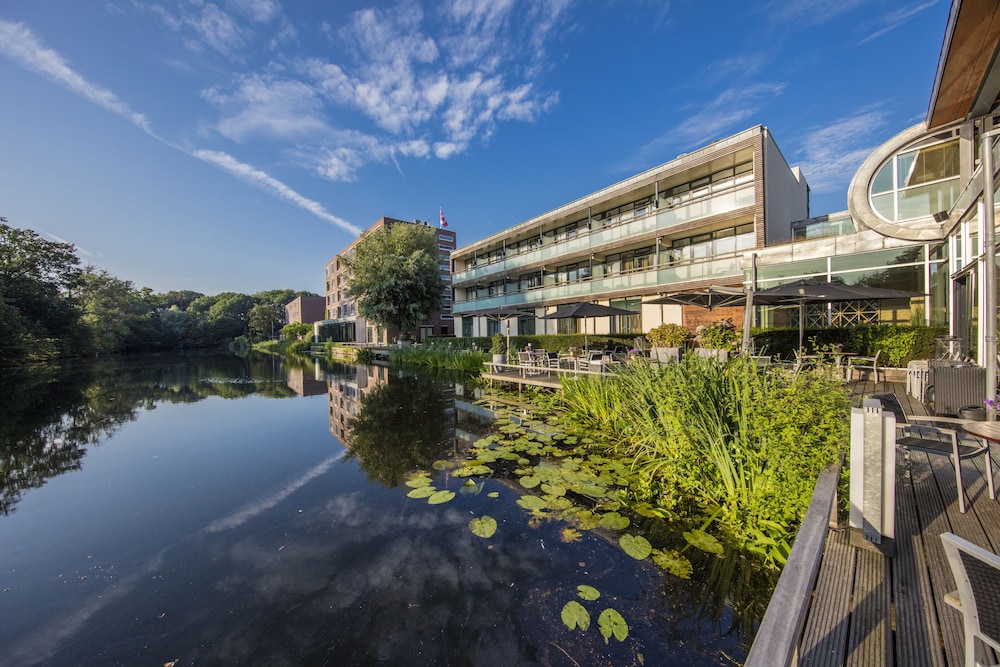
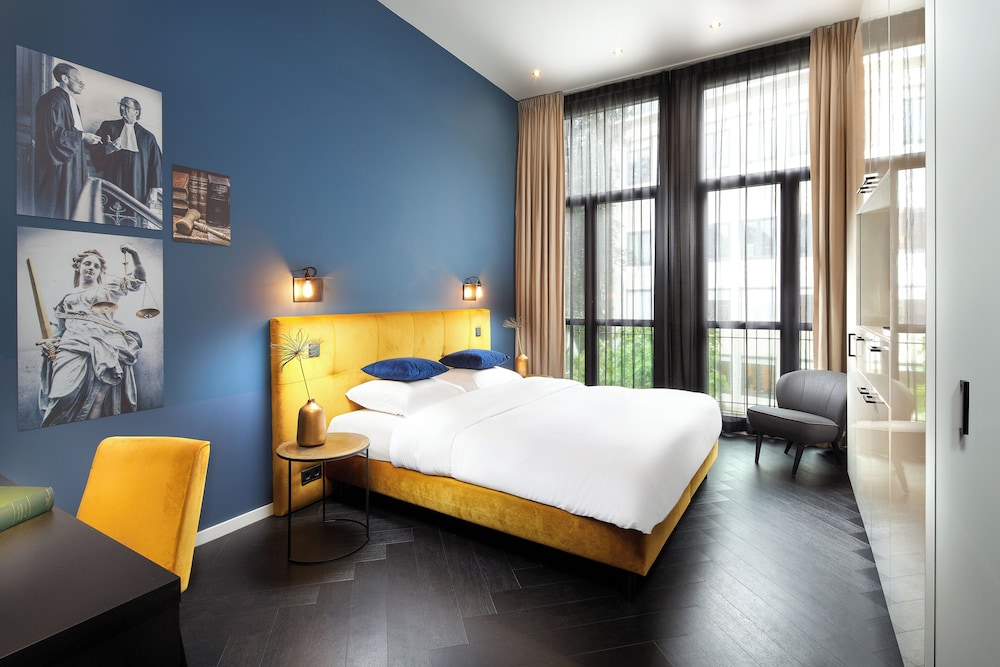
Zeist is well supplied because of the conference trade. The estate and country hotels on its wooded fringes, along the roads towards Den Dolder and Bosch en Duin, run €140-200 for a double and usually have a proper restaurant, which matters when you have walked 18 km and do not want to go out again. Guesthouses and small B&Bs nearer the centre sit at €95-140 and often include a serious breakfast — ask, because a walker's breakfast saves you time and €12 in the morning.
Two things to check when booking. First, whether they will do an early breakfast: a 07:30 start makes day two much more comfortable, and conference hotels sometimes do not open the dining room until 08:00 at weekends. Second, whether you can leave a bag — some places will forward luggage or hold it for a pick-up, which turns day two into a daypack walk. Failing that, the alternative is sleeping at Den Dolder or Soest and rebalancing the days to 24 km and 16 km.
Day 2, 07:30-12:00: the ridge through Den Dolder to Soesterberg
Leave Zeist north through Bosch en Duin's villa woods and onto the Heuvelrug proper. Between Den Dolder and Soesterberg the path turns to loose sand under Scots pine, with heath opening on either side and the occasional stretch of drifting dune — the closest thing to wilderness within 20 km of Utrecht. It is also the slowest going of the whole walk; sand costs you perhaps 20% in pace, so allow four hours for these 13 km rather than three.
At Soesterberg you have a decision. The National Military Museum sits on the former airbase here, with hangar-scale halls of aircraft and tanks, around €18-22 for adults; it is genuinely good but will absorb two and a half hours and you still have 9 km to walk. My advice on a two-day schedule is to skip it and note it for a separate trip, taking lunch instead at a café in Soesterberg or on the heath with supermarket supplies bought in Zeist.
Day 2, 12:00-16:30: Soest, Birkhoven and the Koppelpoort
North of Soesterberg the route runs through Soest — a long ribbon village with a genuine old core around the church, and the last reliable coffee before Amersfoort. Then into Birkhoven and the Bokkeduinen, a belt of woods and small dunes on Amersfoort's western edge, with a wildlife park nearby if you are walking with children who need a bribe. The paths here are firm and shaded, which is welcome on a hot day: the ridge has almost no water and August afternoons regularly hit 26-28°C with no breeze under the pines.
You emerge on Amersfoort's ring and walk in past the station to the Eem. Finish deliberately at the Koppelpoort, the combined land-and-water gate from around 1400 where the river passes through the town wall — it is 200 m from the centre's cafés and it makes the last kilometre feel earned. Then walk the muurhuizen, the ring of houses built into the old wall line, and climb the Onze Lieve Vrouwetoren if you have the legs: 98 m, the tallest medieval tower in the country after Utrecht's.
Navigation, surfaces, and what can go wrong
You are not on a single waymarked long-distance path the whole way, though sections overlap with the national walking routes across the Heuvelrug and the water-defence-line trail near Rijnauwen. Use the numbered walking node network — the green-and-white knooppunten posts — and carry a GPX on your phone plus a paper backup, because the pine plantations between Den Dolder and Soesterberg all look identical and phone signal is patchy in the dips. Verify any route numbering you find online, since markers get rerouted around forestry and military land.
Two real hazards. Military terrain: parts of the area around Soesterberg and Leusden are exercise ground with restricted access — obey the signs and do not shortcut across them. And thunderstorms: the ridge is exposed heath in places and Dutch summer storms build fast in the afternoon. If one is forecast, start earlier and plan to be off the open heath by 15:00. Boots over trail shoes, because the sand gets into everything, and two litres of water minimum on day two.
Sleeping in Amersfoort, and how to shorten the walk
If you stay the night rather than training home, Amersfoort's centre has small hotels and guesthouses inside the old walls at €110-170, which is the right choice — you can walk to dinner in three minutes and the medieval core is at its best after the day-trippers leave. Chain hotels near the station and the Vathorst edge run €95-140 with parking. Book ahead for weekends in June and around the city's summer events, when the small central stock sells out.
To shorten: end day two at Soest and take a regional bus or the train from Soest Zuid into Amersfoort, cutting 9 km. To shorten day one, start at Bunnik station instead of the Oudegracht, which removes 8 km of city and river-corridor walking — you lose the Amelisweerd beeches, which are the best part, so I would rather trim the far end. For a one-day version, walk Utrecht to Zeist, 18 km, and take the bus back along the N237 after cake at Slot Zeist.
Before you book
The questions people ask about Zeist, answered with this month’s numbers.
By Dutch standards, hilly; by anyone else's, gentle. The Utrechtse Heuvelrug tops out around 50-60 m and the cumulative ascent across two days is a few hundred metres in short rises. The harder work is loose sand between Den Dolder and Soesterberg, which slows your pace more than any gradient.
Yes, at several points. Bunnik station is 11 km in on day one; Zeist has frequent buses to Utrecht along the N237 corridor; Den Dolder and Soest Zuid both have stations on day two. Check the operator's timetable that morning, as evening and Sunday frequencies are thinner than weekday ones.
Yes, and the heath is beautiful in low sun, but daylight from December to February gives you roughly eight usable hours, so day two's 22 km needs a 08:00 start. Woodland paths get muddy, some cafés on the ridge keep shorter winter hours, and there is no shelter on the open heath in wind.
Per person, roughly €95-200 for one night in Zeist depending on whether you take a guesthouse or an estate hotel, €25-40 a day on food if you buy lunch in supermarkets and eat one restaurant dinner, and single-figure euros for the train back from Amersfoort. Skipping the military museum keeps entry costs at zero.