Free things to do in Utrecht
Utrecht rewards people who walk, cycle and look up: here are more than 30 things worth doing that cost €0, from a cloister garden beside the Dom to free swimming beaches on the city edge.
 Wharf-level terraces along the Oudegracht in Utrecht at dusk
The Dom quarter, free at ground level
Climbing the Domtoren costs €12.50 and needs a guided slot, but almost everything around it is free. Walk through the arch on Domplein into the Pandhof, the fifteenth-century cloister garden with a herb-bed layout, a fountain and the best view of the tower from below; it opens with the church, roughly 10:00 to 17:00. Next door, Flora's Hof is a walled garden on the site of the old bishop's courtyard, usually empty at nine in the morning. The Domkerk itself asks no entry fee, only a donation box, and its Gothic choir feels enormous once you realise the nave collapsed in a 1674 tornado.
Stand on the pale stones set into Domplein and you are standing in the missing nave: the line of the vanished aisle is marked in the paving, which explains why the tower and church are separated by open square. On Saturdays the carillon is played from the tower, audible for free anywhere within a few blocks, and the sound carries best from the benches on Domplein or from Achter de Dom. Add the Janskerkhof churchyard, the Nicolaikerk on Nicolaaskerkhof and the Jacobikerk on St Jacobsstraat, all free to enter during opening hours, and you have half a day of architecture without a ticket.
Walk the werven, Utrecht's split-level canals
Utrecht's signature is the wharf, or werf: a lower quay running below street level along the Oudegracht and Nieuwegracht, built so goods could be unloaded straight into cellars. Walking the full length of the Oudegracht at wharf level, from the Weerdsluis in the north to Ledig Erf in the south, takes about 40 minutes and costs nothing. Steps down are frequent; the stretch between Zandbrug and Bakkerbrug is the most photographed, while the Nieuwegracht, with its wider water and lime trees, is where residents actually sit with a book.
Do the same route after dark and it changes completely, because the cellars, bridges and church walls are lit as part of the city's long-running light-art programme; the illuminated arches near the Bemuurde Weerd and along Nieuwegracht are the highlights. Cross to the Kromme Nieuwegracht, which curves because it follows the old bed of the Rhine, and you get the quietest canal in the centre. Bring your own bottle and sit on a wharf edge like students do; drinking outdoors is tolerated on the werven, but the city fines litter, so take everything home.
Parks: from the old ramparts to a butterfly garden
The Zocherpark is the ring of romantic parkland laid over Utrecht's demolished city walls in the 1830s, wrapping the whole centre in about 3.5 kilometres of winding paths, ponds and bastions. Walk or cycle the full loop and you pass the Sonnenborgh bastion, the Lepelenburg lawn where the city sprawls out in the first warm week of April, and the manicured Bruntenhof almshouse courtyard just off Lepelenburg. Griftpark, north of the centre off the Wittevrouwensingel, is the family choice: free playgrounds, a skate bowl, a small petting farm and paddling water in summer, all open dawn to dusk.
East of the centre, Wilhelminapark has a boating pond, tall beeches and a bandstand; concerts there in summer are usually free to stand and listen. For something more unusual, cycle 25 minutes west to Máximapark in Leidsche Rijn, a 300-hectare landscape park built around a raised ring path called the Binnenhof. Inside it, the Vlinderhof is a free perennial garden designed by Piet Oudolf, best from late June to September when it is chest-high and full of bees. The park also holds a Roman watchtower reconstruction on the old limes frontier.
Free water: estate woods and swimming beaches
Amelisweerd is the reason people move to east Utrecht. Cycle 20 minutes from the centre along the Kromme Rijn and you reach three linked estates, Oud Amelisweerd, Nieuw Amelisweerd and Rhijnauwen, with ancient beech avenues, meadows and a river you can wade into. Entry is free and always open; the pancake house at Rhijnauwen and the tea garden at the fort are optional extras. On a summer Sunday, join the locals swimming from the grassy bank near the Kromme Rijn bend, then walk the long lime avenue on Oud Amelisweerd for the best light of the day.
For proper swimming without a ticket, Strand Oog in Al sits where the Amsterdam-Rijnkanaal meets the Leidsche Rijn, a ten-minute cycle west of Centraal, with a sand beach, lifeguard flags in season and no gate. Haarrijnse Plas, further out past Leidsche Rijn, has a longer beach and shallow entry that suits children. Thirty minutes north by bike or bus the Loosdrechtse Plassen open up: public shores at Oud-Loosdrecht and along the Nieuw-Loosdrechtsedijk cost nothing to sit on, though signposted beach car parks charge around €7.
Free culture: markets, libraries, galleries, lunchtime music
Utrecht's markets are free theatre. The Saturday flower market on Janskerkhof runs 07:00 to 17:00 under the plane trees; the big general market fills Vredenburg on Wednesdays, Fridays and Saturdays; the Friday book market on the Oudegracht near the Stadhuisbrug is where paperbacks go for a euro or two. Add the Saturday fabric market on Breedstraat and the organic Saturday market on Vredenburg, and you can graze samples of cheese, stroopwafel offcuts and raw herring without buying a full portion, though buying one at €3 to €5 is the decent thing to do.
Bibliotheek Neude, the 1920s post office converted into the central library, is free to enter and worth it for the vaulted hall alone; the upper floors have reading terraces looking towards the Dom. Kunstliefde on Nobelstraat, an artists' society founded in 1807, usually charges nothing or a couple of euros for its exhibitions, and Casco Art Institute on Lange Nieuwstraat works on donation. TivoliVredenburg on Vredenburgkade programmes free-entry lunchtime and early-evening concerts in its foyers most weeks; check the day's agenda screens by the door before you plan around it.
Forts and heath: the free countryside on Utrecht's doorstep
Utrecht sits inside the New Dutch Waterline, a nineteenth-century defence ring of forts and floodable polders now on the UNESCO list. Several forts are free to walk around: Fort Blauwkapel is an entire fortified village 15 minutes by bike north-east of the centre, still inhabited, with earthworks you can stroll at any hour. Fort de Gagel and Fort aan de Klop sit on the Vecht north of Overvecht, both open grounds with waterside benches; Fort aan de Klop has a café and a small campsite. The Waterliniemuseum at Fort Vechten near Bunnik charges about €16, but its surrounding earthworks and moats are open access.
For hills, take the train from Utrecht Centraal to Driebergen-Zeist, 12 minutes and roughly €4 each way, and walk straight into Nationaal Park Utrechtse Heuvelrug: pine woods, sand drifts and heather with no entry fee anywhere. The Zeisterbos begins within a kilometre of the station; longer marked routes run east to Austerlitz and the Kaapse Bossen near Doorn. Kasteel de Haar in Haarzuilens charges for the interior, but the surrounding estate paths and village of red-and-white shutters cost nothing, and the Slotpark walk takes an easy hour.
Frequently asked questions
What people ask before they set off on this one.
No. Climbing the 465 steps costs about €12.50 for adults and is only possible on a guided tour booked at the RonDom visitor centre on Domplein. Everything around it, however, is free: the Domkerk interior, the Pandhof cloister garden and Flora's Hof. Book the tower a day or two ahead in summer, when slots sell out by mid-morning.
Rarely on their own, but the Museumkaart at roughly €75 a year covers the Centraal Museum, Museum Speelklok, Museum Catharijneconvent, DOMunder and the Rietveld Schröder House, so two days of heavy museum-going already beats individual tickets of €13 to €17. Children under 12 are often free or a few euros. Smaller spaces like Kunstliefde and Casco run on donation.
Yes. Strand Oog in Al on the Amsterdam-Rijnkanaal and the Haarrijnse Plas beach in Leidsche Rijn are both free and unfenced, with lifeguards in high summer. The Kromme Rijn at Amelisweerd is a local favourite for a quick dip. Check the national swimming-water app or the signs at the entrance, because blue-algae warnings do appear in July and August.
Griftpark north of the centre has playgrounds, a skate bowl and a free petting farm; Máximapark in Leidsche Rijn has water play, a Roman watchtower and long car-free paths. The Wednesday and Saturday markets on Vredenburg keep small people busy, and the wharves along the Oudegracht are a boat-spotting walk. All of these are open dawn to dusk with no ticket.
The medieval centre is about 1.5 kilometres across, so almost everything inside the Zocherpark ring is a 20-minute walk at most. Amelisweerd, Griftpark and Strand Oog in Al are all within 25 minutes by bike, and rental starts near €10 a day. If you do need transit, a U-OV day ticket runs about €9, but many visitors never buy one.
The city has lit bridges, cellars and church facades along the Oudegracht and Nieuwegracht for years, and the installations remain switched on after dark; some individual works have been retired or replaced. Treat it as a free evening walk rather than a fixed trail, starting at Ledig Erf and heading north at wharf level. It is at its best between October and March, when darkness falls before dinner.
Hotels in Utrecht
Hotels we cover across Utrecht
- Gooiland Hotel 3★ · 4.1/5
- Holiday Inn Express Utrecht Papendorp 3★ · 4.1/5
- Hotel Abcoude 3★ · 4.1/5
- Star Lodge Hotels Utrecht 3★ · 4.1/5
- Amrâth Berghôtel Amersfoort 4★ · 4/5
- Amrath Hotel Lapershoek Arenapark 4★ · 4/5
- Fletcher Hotel Restaurant De Klepperman 4★ · 4/5
- Boshotel Overberg 3★ · 4/5
- Hotel 't Meertje 3★ · 4/5
- Hotel de Tabaksplant 3★ · 4/5
- Hotel Promenade 3★ · 4/5
- ibis Utrecht 3★ · 4/5
- NH Centre Utrecht 3★ · 4/5
- Fletcher Hotel Het Witte Huis 4★ · 3.9/5
- Fletcher Hotel Restaurant Amersfoort 4★ · 3.9/5
- Postillion Hotel Utrecht Bunnik 4★ · 3.9/5
- Van der Valk Hotel Hilversum De Witte Bergen 4★ · 3.9/5
- Bastion Hotel Bussum Hilversum 3★ · 3.9/5
- Puur Lage Vuursche 2★ · 3.9/5
- Apollo Hotel Utrecht City Centre 4★ · 3.8/5
- Fletcher Hotel Restaurant Loosdrecht Amsterdam 4★ · 3.7/5
- Bastion Hotel Utrecht 3★ · 3.6/5
- Hotel Chao 2★ · 3.6/5
- Tulip Inn Meerkerk 3★ · 3.5/5
More guides to Utrecht
All guides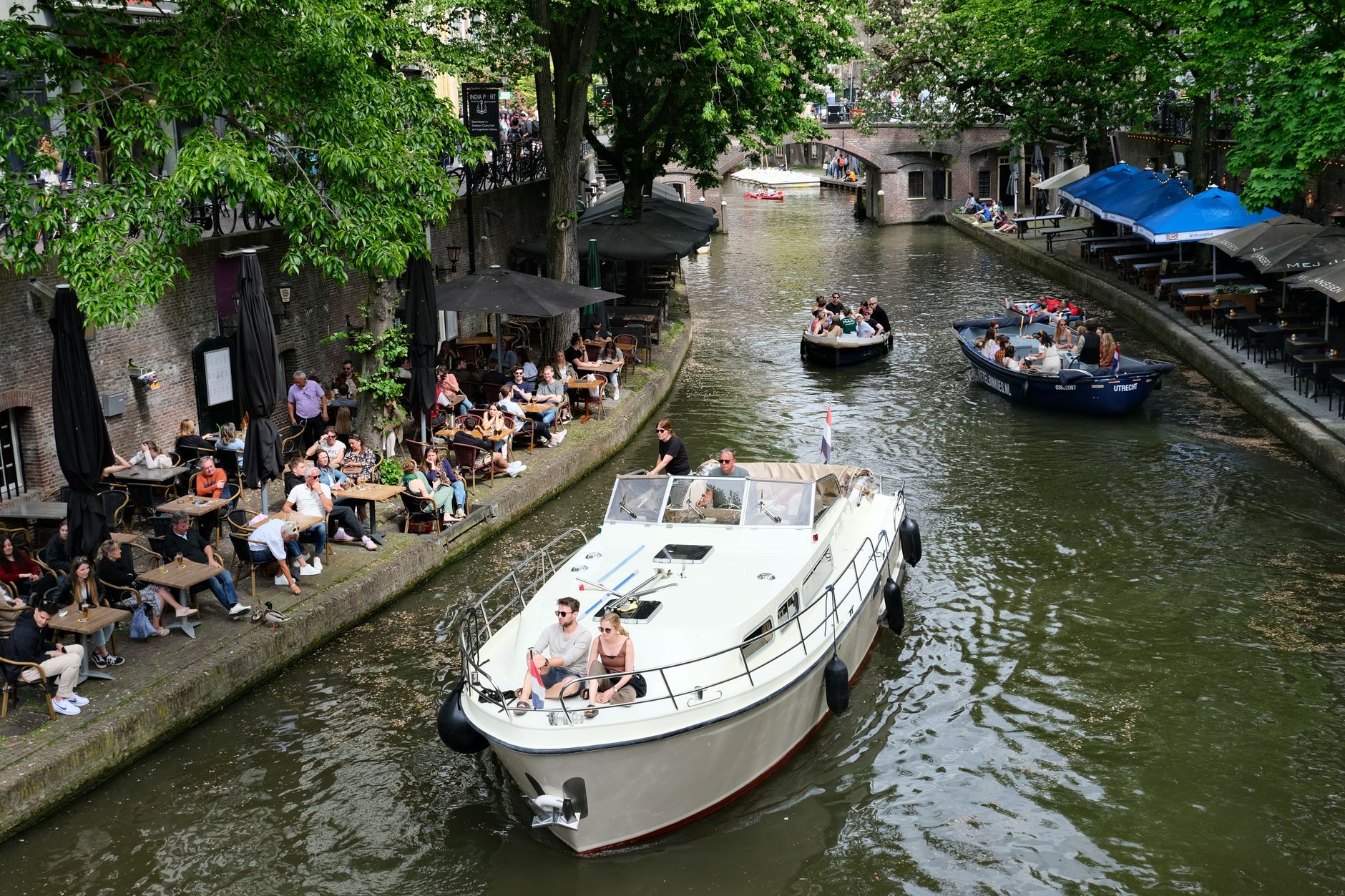 Itineraries · 9 min read
48 hours in Utrecht
Itineraries · 9 min read
48 hours in Utrecht
Two days is enough to climb the 112-metre Domtoren, eat on a wharf cellar terrace and cycle out to a river estate — this plan covers all three, with about 20 kilometres of easy cycling built in.
 Itineraries · 10 min read
One week in Utrecht
Itineraries · 10 min read
One week in Utrecht
Seven days lets you treat Utrecht as a base rather than a stop: three days in the city, four out on the Heuvelrug ridge, the Vecht lakes and the castle belt, with roughly 120 kilometres of cycling if you want it.
 Itineraries · 9 min read
Utrecht in 3 days on a budget
Itineraries · 9 min read
Utrecht in 3 days on a budget
A three-day plan that lands around €50 to €70 a day including a hostel bed, built on free parks, forts and church towers, a €4.55 station bike and market food instead of restaurants.
Same rooms, same prices you would pay anywhere else, with one verified tonne of carbon removal funded by every booking you make here.