Signature dishes of Netherlands in Utrecht
Dutch food is better than its reputation once you know where to eat it: 6 bitterballen for €8, a herring roll for €4, and a rijsttafel of 15 small dishes for €35. Here is what to order in Utrecht, and where.
 Bitterballen with mustard on a wharf-cellar café table in Utrecht
Bitterballen and the brown café ritual
The national bar snack is the bitterbal: a crisp-crumbed sphere of slow-cooked veal or beef ragout, served scorching with grainy mustard, usually six or eight to a portion for €7 to €9. The correct setting is a bruin café, a brown café whose walls are tobacco-dark and whose beer comes in a 250 millilitre vaasje for around €4. Try Café Ledig Erf at the Tolsteeg lock, where the terrace watches boats pass, or Kafé België on the Oudegracht, which also pours a couple of hundred beers.
Order technique matters: bite a small hole first, let the steam out, then dip. A borrel, the late-afternoon drink, often comes with a bittergarnituur, a mixed platter of bitterballen, cheese cubes with mustard, and frikandel or spring rolls for €14 to €18 between two. Vegetarian and vegan bitterballen are now standard in Utrecht, usually mushroom or pea, and often as good as the meat. Most cafés serve them from midday until late, and the kitchen closing at 22:00 rarely stops the fryer.
Kroketten, frikandel and the snackbar canon
The kroket is the bitterbal in cylinder form, and the broodje kroket, one or two of them jammed into a soft white bun with mustard, is the classic cheap Dutch lunch at €4 to €5.50. Every snackbar has them, and so do market stalls at Vredenburg on Saturdays. The other pillars: frikandel, a skinless minced sausage, ordered speciaal with curry ketchup, mayonnaise and raw onion; kaassoufflé, a molten cheese pocket; and the automat wall of coin-operated hatches, still found in one or two chain outlets.
This is not health food and it is not trying to be, but it is genuine everyday eating rather than a tourist performance. Prices sit between €2.50 and €6 per item, service is brisk and it is almost always card only. If you want the upgraded version, several Utrecht kitchens make their own kroketten with shrimp or veal shin and serve them as a €12 starter with a lemon wedge. The classic pairing at 02:00, after the wharf-cellar bars, remains a kroket and a bottle of chocolate milk.
Herring, kibbeling and the fish stall
Utrecht has a street called Vismarkt for a reason, and its descendants are the fish stalls at the Saturday market on Vredenburg and the fishmongers around town. Order a broodje haring for about €4: raw, mildly cured herring in a soft roll with chopped onion and pickle. In late May and June the Hollandse Nieuwe, the first fatty catch of the season, arrives and is eaten by the tail with your head tipped back, which is the correct and only method. It is delicate rather than fishy, closer to sashimi than to a kipper.
If raw fish is a step too far, take kibbeling, chunks of battered white fish, usually cod or pollack, fried to order with a garlic or tartare sauce, around €7 for a generous portion. Lekkerbekje is the same idea in one large fillet. Smoked eel, gerookte paling, is the local luxury from the Vecht and the Loosdrecht lakes and costs €8 or more for a small serving; it is rich, oily and superb on rye. Ask which fish is MSC-certified, as the better Utrecht stalls label their sourcing.
Fries, and why they are a dish here
Dutch friet is thick-cut, fried twice, and served in a paper cone with a fork stuck in the top. The default sauce is mayonnaise, properly fritessaus, and the two upgrades are oorlog, meaning war, which is mayonnaise plus satay peanut sauce plus raw onion, and patatje speciaal with curry ketchup. A cone runs €4 to €5.50 and a decent portion is a light meal. In Utrecht the reference address is Manneken Pis on Vinkenburgstraat, where the potatoes are hand-cut and Belgian-style, and there is usually a queue at 18:00.
Judging a friture is easy: look for whole potatoes being cut on site, a double-fry rhythm rather than a heat lamp, and beef fat or vegetable oil declared openly. Cones come with compostable forks in most places now, and the deposit-free paper is recyclable. Eat them on a bridge or the canal wharf rather than walking, because they get cold in four minutes flat. Add a portion of satésaus on the side for €0.90 and you understand the entire Dutch relationship with Indonesian flavours in one bite.
Winter plates: erwtensoep, stamppot and hutspot
From November to March, Utrecht eetcafés put the winter board out. Erwtensoep, also called snert, is a split-pea soup so thick a spoon stands in it, with smoked sausage, pork and celeriac, served with rye bread and bacon for €7 to €11. Stamppot is potato mashed with a vegetable, most often boerenkool, kale, or endive, topped with a rookworst and a well of gravy, typically €14 to €18 as a main. Hutspot uses carrot and onion and is tied to the siege of Leiden.
These are the dishes to seek out around Wittevrouwenstraat, in the wharf-cellar restaurants of the Nieuwegracht and in village cafés on the Heuvelrug after a cold walk, where the same plate feels twice as earned. Vegetarian versions are common, and vegan rookworst is sold in every supermarket. If you are here in summer instead, the seasonal equivalents are white asparagus in May, served with ham and egg, and new potatoes with Dutch strawberries, both of which appear on blackboards for a few weeks only.
Cheese, and the regional dairy story
Gouda is a place two train stops away, not just a wax-coated wheel, and Utrecht sits among the dairy polders that supply it. At the Saturday market on Vredenburg and at the small cheese shops on Twijnstraat, ask for boerenkaas, farmhouse cheese made with raw milk, and taste across ages: jong at four weeks is mild and springy, belegen at four months rounder, oud at a year crystalline and salty, overjarig at two years plus intense enough to eat in slivers. Expect €12 to €25 a kilogram, and vacuum packing for travel.
Pair it as locals do: cubes with mustard and a beer, or thin slices on breakfast bread with nothing else. Look also for Utrecht-area organic and meadow-milk labels, the latter guaranteeing cows grazed outdoors, which is the sustainability question that actually matters in Dutch dairy. Goat cheeses from Heuvelrug farms turn up at the Friday organic market. Many farms along the Kromme Rijn and the Vecht sell direct from a landwinkel farm shop, which makes a good excuse for a bike route between Bunnik and Wijk bij Duurstede.
Sweet things: stroopwafel, poffertjes and Utrechtse sprits
A stroopwafel from a market griddle, split hot and filled with caramel syrup, costs €2.50 to €3.50 and bears no relation to the packaged version. Poffertjes are tiny yeasted pancakes served by the dozen with butter and icing sugar for €6 to €9, usually from a wooden kraam on a market square. Full Dutch pancakes, pannenkoeken, are plate-sized and savoury or sweet, best eaten in a cellar restaurant on the Oudegracht for €10 to €15, with bacon and syrup as the classic combination.
Utrecht has its own biscuit, the Utrechtse sprits, a wide, crumbly, heavily buttered shortbread ribbon sold by bakeries in the centre for a couple of euros; it is a proper local souvenir. Add oliebollen, deep-fried dough balls with icing sugar, sold from December stalls into New Year, and speculaas spice biscuits around Sinterklaas in early December. For chocolate, small Utrecht makers sell Dom Tower shapes and bean-to-bar tablets from around €5, and several advertise direct-trade cacao if that matters to you.
Indonesian rijsttafel and the drinks that go with everything
Dutch food is inseparable from Indonesia, and a rijsttafel is the country’s great shared meal: rice with a dozen or more small dishes, rendang, satay, sambals, gado-gado, sweet-sour vegetables and fried tempeh, for €30 to €40 a head. Utrecht’s standard-bearer is Blauw on Springweg, where a modern rijsttafel is served in a stripped-back room and booking is advisable. Cheaper and just as good in its own way is takeaway from a toko in the Lombok district, where a full container of nasi or bami with two toppings runs €9 to €12.
To drink: Dutch pilsner from the tap, or better, Utrecht craft beer. Brouwerij De Leckere brews organic in the city, Oproer runs a fully vegan brewery and taproom in the Rotsoord industrial strip, and Maximus pours strong seasonals; expect €5.50 to €6.50 a glass. Jenever, the juniper spirit that preceded gin, comes jong or oud in a tulip glass for €4 to €6, drunk alongside a beer as a kopstootje. Non-alcoholic Dutch beers are excellent and widely stocked, and coffee culture is strong and third-wave in the centre.
Frequently asked questions
What people ask before they set off on this one.
Utrecht has no single famous dish but two local specialities: the Utrechtse sprits, a wide, crumbly butter shortbread sold by bakeries in the centre for a couple of euros, and a strong brewing scene including organic De Leckere and the vegan Oproer brewery. Beyond that you eat national classics done well: bitterballen in brown cafés, herring and kibbeling at the Vredenburg market, hand-cut fries, and Indonesian rijsttafel.
For a broodje haring, the fillets come in a soft roll with chopped raw onion and pickles, and you simply eat it like a sandwich for about €4. For the traditional method, mostly seen with the Hollandse Nieuwe in late May and June, hold the fillet by the tail, tip your head back and lower it into your mouth. It is mild, fatty and clean-tasting, more like sashimi than a smoked or salted fish.
Any brown café will serve them from midday to late. Café Ledig Erf by the Tolsteeg lock and Kafé België on the Oudegracht are reliable and central, and portions of six or eight cost €7 to €9 with mustard. Ask for the bittergarnituur if you want a mixed platter for two at €14 to €18. Vegetarian and vegan versions are standard in Utrecht and frequently excellent.
Very. Utrecht is one of the strongest Dutch cities for plant-based eating, with vegan bitterballen and rookworst on ordinary menus, an entirely vegan brewery in Oproer, vegan meals for around €7 at the ACU collective on Voorstraat, and dedicated plant-based burger and snackbar outlets in the centre. Supermarkets stock a large range, and organic shops around Twijnstraat and the Friday market on Vredenburg cover self-catering.
A rijsttafel is a Dutch-Indonesian feast of rice served with a dozen or more small dishes, from rendang and satay to gado-gado, sambals and fried tempeh, meant to be shared. In Utrecht restaurants expect €30 to €40 per person, with Blauw on Springweg the best-known address and reservations advisable. A cheaper route is a toko in the Lombok district, where a filled container of nasi or bami costs €9 to €12.
The filling is essentially the same slow-cooked meat ragout, thickened and chilled before crumbing and frying. A bitterbal is a bite-sized sphere served as a bar snack with mustard, usually six or eight for €7 to €9. A kroket is the larger cylinder, eaten as lunch in a soft bun as a broodje kroket for €4 to €5.50, or with fries. Vegetarian versions of both are widely available.
Hotels in Utrecht
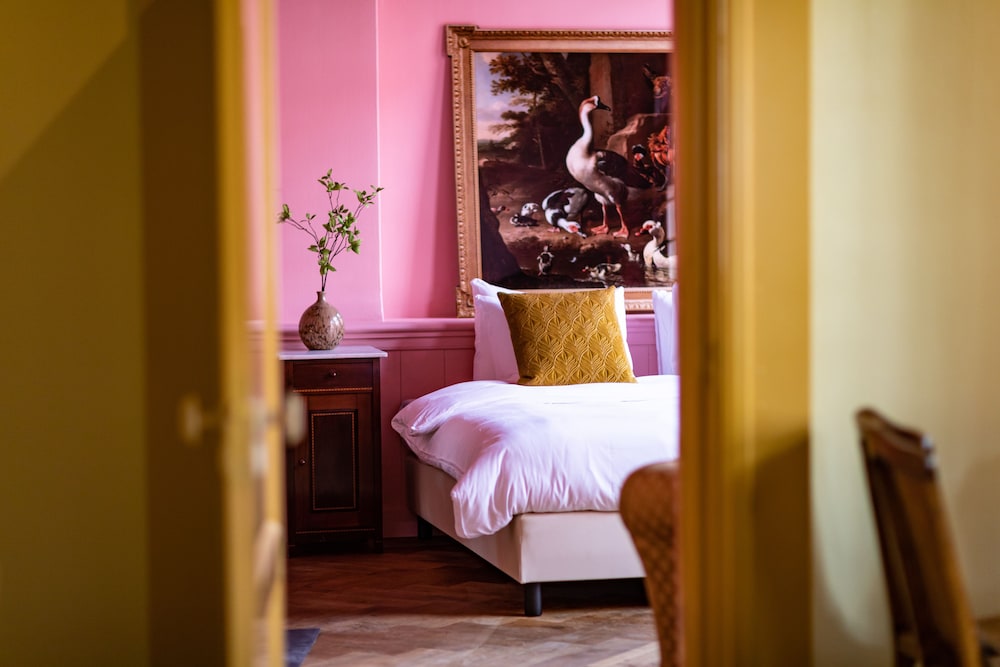
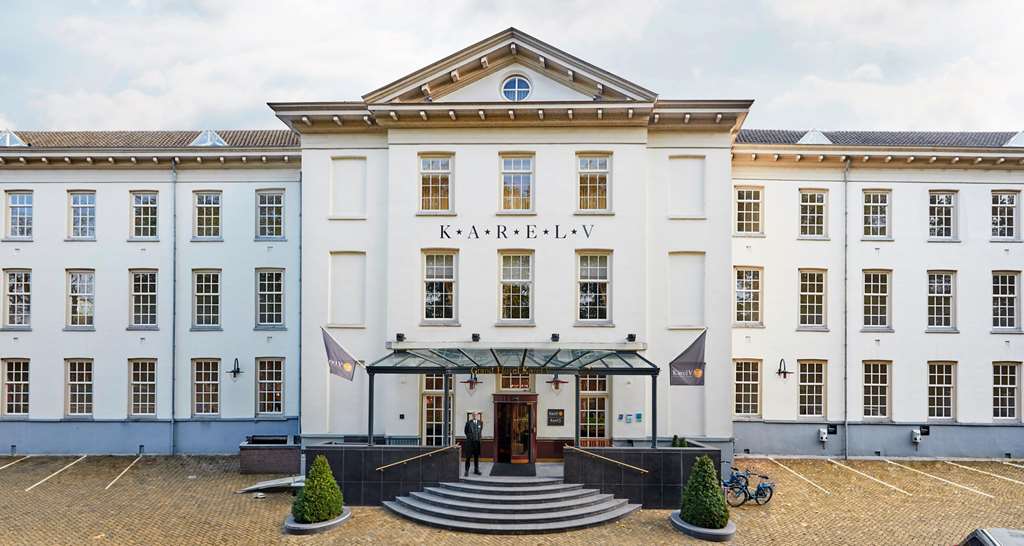
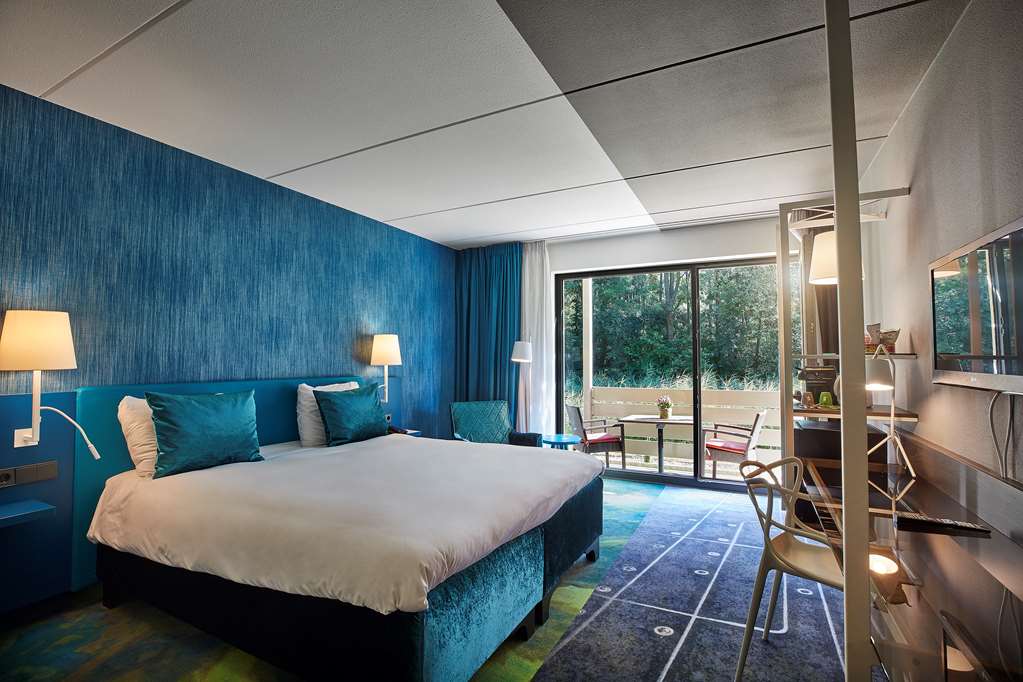
Hotels we cover across Utrecht
- B&B Soestdijk 3★
- B&B Vita Nova 3★
- Bb 4U 3★
- Bb Aan de Zuyderzee 3★
- Bb de Hinker 3★
- Beautiful Apartment on the First Floor Abcoude 3★
- Beautiful House in The Middle of Nature 3★
- Beautiful House With Covered Terrace in Rhenen 3★
- Bed & Breakfast 23 3★
- Bed & Breakfast Bloemen Vertellen 3★
- Bed & Breakfast de Oude Kapel 3★
- Bed & Breakfast de Ruige Weide 3★
- Bed & Breakfast Ff Rust 3★
- Bed & Breakfast Trouwborst 3★
- Bed & Brood de Vogelpoel 3★
- Bed and Breakfast Always Good 3★
- Bed and Breakfast Klein Groenbergen 3★
- Bed en B ootje 3★
- Bedje in de polder 3★
- Bistrotel 'T Amsterdammertje 3★
- Blauwborst 24 18 3★
- Blauwborst 24 20 3★
- Blauwborst 24 24 3★
- Blossom Barn Lodges 3★
More guides to Utrecht
All guides Itineraries · 9 min read
48 hours in Utrecht
Itineraries · 9 min read
48 hours in Utrecht
Two days is enough to climb the 112-metre Domtoren, eat on a wharf cellar terrace and cycle out to a river estate — this plan covers all three, with about 20 kilometres of easy cycling built in.
 Itineraries · 10 min read
One week in Utrecht
Itineraries · 10 min read
One week in Utrecht
Seven days lets you treat Utrecht as a base rather than a stop: three days in the city, four out on the Heuvelrug ridge, the Vecht lakes and the castle belt, with roughly 120 kilometres of cycling if you want it.
 Itineraries · 9 min read
Utrecht in 3 days on a budget
Itineraries · 9 min read
Utrecht in 3 days on a budget
A three-day plan that lands around €50 to €70 a day including a hostel bed, built on free parks, forts and church towers, a €4.55 station bike and market food instead of restaurants.
Same rooms, same prices you would pay anywhere else, with one verified tonne of carbon removal funded by every booking you make here.