Museum Speelklok
A museum of self-playing musical instruments in a medieval church, where every guided tour ends with a street organ shaking the room and a mechanical bird singing in your ear.
 Self-playing street organ inside Museum Speelklok in Utrecht
What to expect at Museum Speelklok
Museum Speelklok holds the world's finest collection of self-playing musical instruments, and it does so inside the Buurkerk on Steenweg, the oldest parish church in Utrecht's city centre. The collection grew out of a private assembly of automatic instruments and opened here in 1984, moving from Utrecht's old Nicolaï church tradition of mechanical music into a permanent home. What you find inside runs from tiny singing-bird boxes and musical snuffboxes through carillon drums, orchestrions, pianolas and dance organs to enormous Dutch street organs. Roughly a thousand objects are in the collection, with a few hundred on display, and crucially many of them still work: the museum runs its own restoration workshop, so this is a living instrument collection rather than a row of silent cabinets. The medieval nave gives the big organs the acoustics they were never designed for and absolutely deserve.
The visit is built around a guided demonstration, and you should treat that as the main event rather than an optional extra. A guide walks a group through the nave switching instruments on: a Swiss music box the size of a book, an automaton that writes, a violin-playing machine, a pianola thumping out ragtime, and finally a Dutch street organ at full volume with bass drum and cymbal, which is genuinely physical at close range. Between tours you explore freely. Side galleries explain how pinned barrels, punched paper rolls and bellows encode music, and there is a hands-on section where children pump, crank and trigger things. The tower and church fabric are part of the story too: the Buurkerk lost its tower spire, and the walls carry traces of its long life as a parish church before it became a concert hall for machines.
Ninety minutes to two hours is right, and the timing of the guided tour drives everything. Tours run roughly hourly from late morning; arrive fifteen minutes before one starts rather than in the middle of it, and check the day's schedule at the desk on arrival. Tours are given in Dutch as standard with English regularly offered, and guides will switch or summarise in English if asked, so speak up. Book online in school holidays and on wet weekends. Do not skip the hands-on room even without children, and do not rush the small automata just because the street organs are louder. The shop sells actual music boxes rather than tat, and the café at the front of the church is a decent stop before you walk on to the Oudegracht.
This is the easiest of Utrecht's major museums to reach. From Utrecht Centraal walk through Hoog Catharijne, out at Vredenburg, and turn into Steenweg: eight minutes, all indoors then all pedestrian. Buses across the city centre stop at Neude, four minutes away, and at Janskerkhof, six minutes; a contactless single ride costs roughly €2 to €3. Utrecht Centraal is the country's busiest railway hub, so intercity trains from Amsterdam take about half an hour, from Rotterdam about forty minutes and from Amersfoort about twenty. Driving into the medieval centre is a mistake: the streets around Steenweg are pedestrianised and the nearest garages, Springweg and La Vie, are expensive by the hour. Use P+R Westraven or P+R Papendorp instead, where the standard deal is around €5 including return transport for up to five people.
Adult admission is around €16.50, and children roughly €9.50 from age four, with under-4s free. Family tickets are offered and usually save a few euro over individual entries. The Museumkaart, about €75 a year, admits you free and is accepted here as at most Utrecht museums, so pair it with Catharijneconvent, the Centraal Museum and the Spoorwegmuseum to make it pay. The guided demonstration tour is included in the entry price and is not an upsell, which is worth knowing because the tour is the reason to come. Extras are limited to the shop and the café. Evening concerts and special programmes are ticketed separately when they run, and the museum occasionally hosts organ recitals in the nave that are priced independently of daytime admission.
The quiet window is Tuesday to Friday at 10:00, right at opening, when you can hear a music box without a crowd around it. From 13:00 onwards on weekends and through the whole of the Dutch school holidays it fills with families, and the demonstration tours run full. The museum is closed on Mondays and on 1 January, 27 April and 25 December. Winter is high season here for the obvious reason: it is warm, dry and loud, so December weekends are the busiest of the year, and the Christmas period brings extra programming. Late spring is the sweet spot, when the centre is pleasant enough that many visitors are outdoors and you get the nave to yourself. Last admission is around 16:00, and the final tour of the day often has spare places.
It suits nearly everyone, and it is the best museum in Utrecht for a mixed-age group who cannot agree on anything. Small children love the volume and the cranks; grandparents recognise the tunes; anyone interested in engineering will spend the tour looking at mechanisms rather than listening. Wheelchair access is good on the main church floor, with a lift to the upper display level and accessible toilets, though a few side rooms are tight. Visitors with hearing sensitivity should know that the street organ finale is genuinely loud and stand at the back. Anyone with only one hour before a train can do this properly, which is not true of the Centraal Museum. People hoping for a serious clock museum should note the name misleads slightly: speelklok means musical clock, and the emphasis is on mechanical music, not horology.
Everything else in the old city is within ten minutes. The Domtoren and Dom Church are six minutes east across Domplein, DOMunder is next to them, the Oudegracht wharf cellars with their canal-level terraces are two minutes away, and the Neude and Janskerkhof squares are five. The Saturday flower market on Janskerkhof and the Vredenburg market are both a short walk if your day falls right. Honest caveats: without a demonstration tour the museum loses much of its point, so a visit squeezed between tours can feel like looking at furniture. The nave gets loud enough to be tiring for a full two hours. And because the instruments are worked hard, a few are always out for restoration, so a specific organ you have read about may be silent in the workshop rather than singing in the church.
Questions about Museum Speelklok
Adult admission is around €16.50, with children roughly €9.50 from age four and under-4s free. Family tickets are available and typically save a few euro against buying separately. The guided demonstration tour, which is the heart of the visit, is included in the price and never charged extra. Museumkaart holders enter free; the card costs about €75 a year and pays for itself quickly if you are also visiting Catharijneconvent, the Centraal Museum and the Spoorwegmuseum.
No, there are no free hours during normal opening. Free admission is tied to categories rather than clock times: children under four, Museumkaart holders, ICOM cardholders and Utrecht U-pas holders. The shop and the café area at the front of the Buurkerk can be visited without buying a ticket. During occasional city-wide cultural events, such as open-monument weekends, parts of the church have been accessible free, but that is exceptional and never guaranteed.
Allow ninety minutes to two hours. The guided demonstration alone runs around forty-five minutes to an hour, and you will want time before or after for the automata cabinets, the explanatory displays about barrels and paper rolls, and the hands-on room. Families with young children often stay closer to two and a half hours because of the interactive section. If you have only one free hour before a train, this museum still works, unlike the larger collections.
Museum Speelklok is closed every Monday. It also closes on 1 January, King's Day on 27 April and 25 December. Standard hours are Tuesday to Sunday, 10:00 to 17:00, with last admission around 16:00 and the final demonstration tour usually starting late afternoon. In Dutch school holidays the museum sometimes opens on Mondays and adds tours, but check the day's programme before travelling for it.
Booking online is advisable rather than essential. It saves queueing at the desk, which matters on rainy weekends, in December and throughout Dutch school holidays, when demonstration tours can reach capacity. Museumkaart holders can usually walk in, but reserving a time slot during busy periods is safer. Groups of ten or more should always book, and school and coach groups must arrange visits in advance so that tour scheduling can absorb them.
Utrecht Centraal is an eight-minute walk: through Hoog Catharijne, out at Vredenburg, then straight into Steenweg. City buses stop at Neude, four minutes away, and Janskerkhof, six minutes, with contactless single fares around €2 to €3. The surrounding streets are pedestrianised, so drivers should not aim for the centre; use P+R Westraven or P+R Papendorp, roughly €5 including return public transport for up to five people.
Hotels near Museum Speelklok
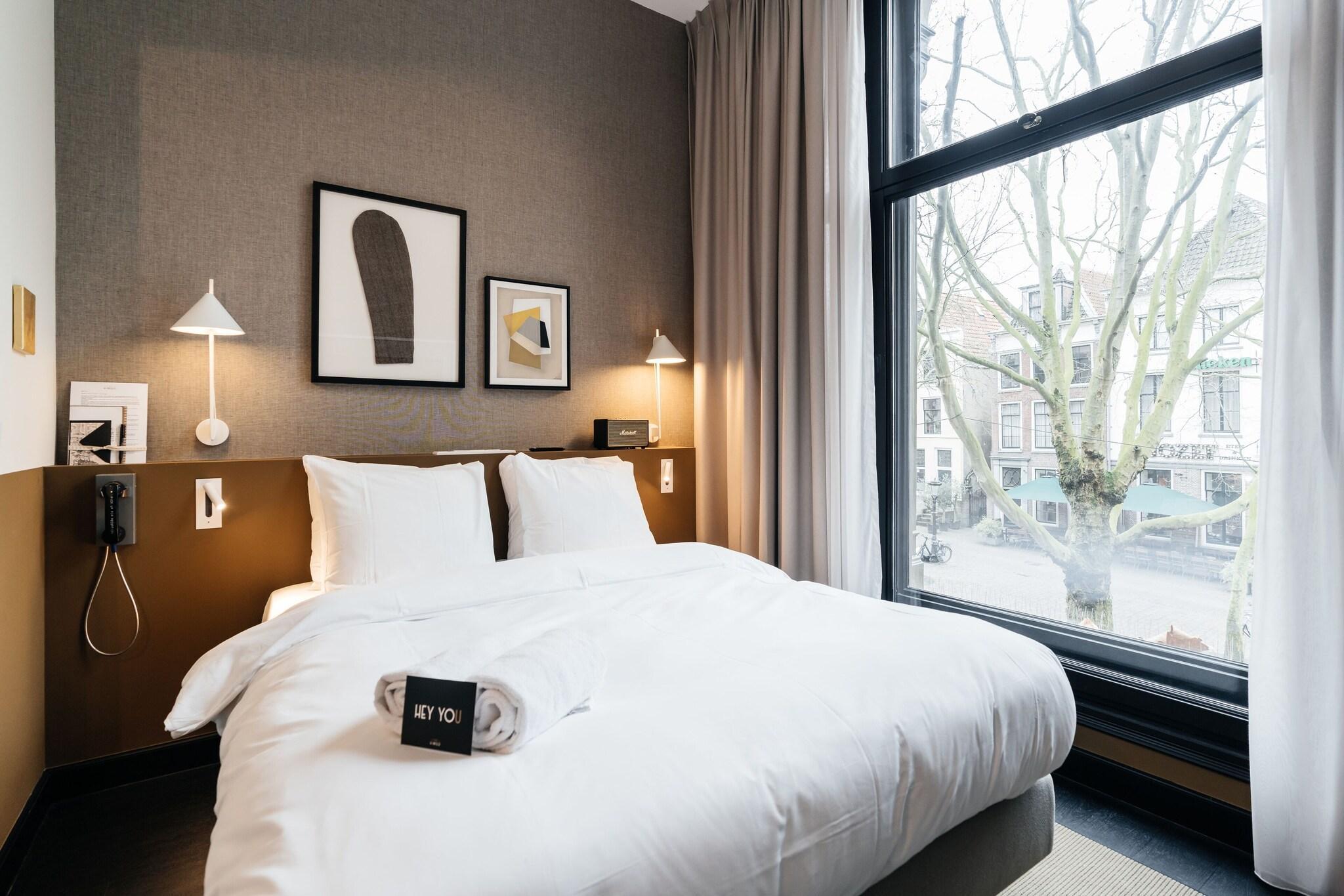
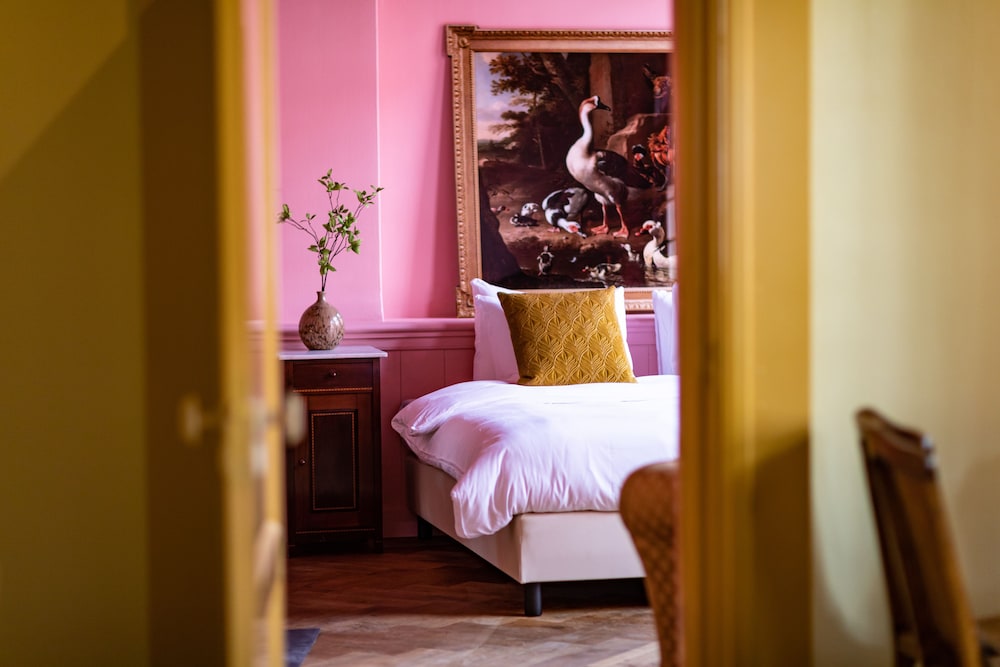
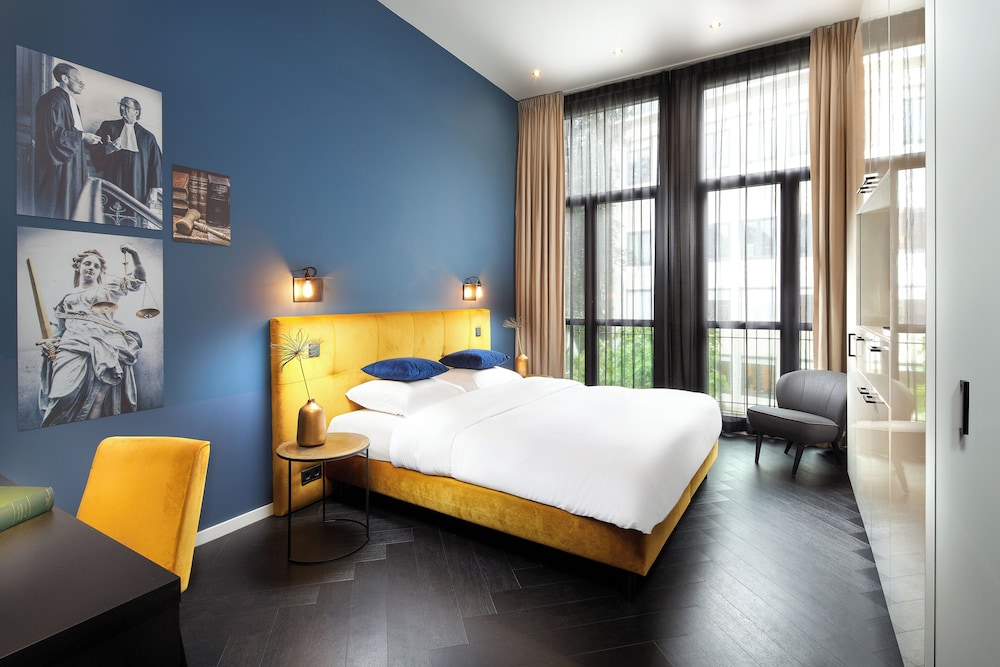
Every hotel we cover in Binnenstad
- City Hall Bridge 3★
- B&B Muntzicht 3★ · 0.1 km away
- Rosendael 4★ · 5/5 · 0.1 km away
- Mother Goose Hotel 3★ · 4.6/5 · 0.1 km away
- Cozy Pillow 4★ · 4.5/5 · 0.1 km away
- Daen S Greenhouse 4★ · 4.9/5 · 0.1 km away
- Logement De Kleine Gans 3★ · 0.1 km away
- Logement Petit Beijers 3★ · 4.8/5 · 0.1 km away
- Unique underground hotel in Utrecht city center 3★ · 0.2 km away
- Anne&Max Boutique Hotel 4★ · 4.2/5 · 0.2 km away
- Stayokay Utrecht Centrum 2★ · 0.2 km away
- The Hunfeld 3★ · 4.5/5 · 0.2 km away
- The Nox Hotel 4★ · 4.7/5 · 0.2 km away
- Maria’s Suite 1★ · 0.2 km away
- Exploris Hotel Utrecht 3★ · 4.2/5 · 0.2 km away
- NH Centre Utrecht 3★ · 4/5 · 0.3 km away
- Brass Hotel 3★ · 4.5/5 · 0.3 km away
- Hotel Beijers 4★ · 4.5/5 · 0.3 km away
- Zocher6 a monumental town house in the city center 4★ · 0.3 km away
- Apollo Hotel Utrecht City Centre 4★ · 3.8/5 · 0.3 km away
- City District Apartment 4★ · 0.3 km away
- Strowis Hostel 3★ · 0.4 km away
- Hampton by Hilton Utrecht Central Station 3★ · 4.3/5 · 0.4 km away
- Crowne Plaza Utrecht Central Station by IHG 4★ · 0.4 km away
More things to do
All things to do

From the journal
All posts Comparisons & rankings
Hotels with free parking in Utrecht, ranked
Comparisons & rankings
Hotels with free parking in Utrecht, ranked
On-street parking inside Utrecht's canal ring can pass €5 an hour and a central hotel space costs €20-30 a night, so here are 8 kinds of hotel that throw the car in for nothing — and the ride into town each one leaves you with.
 Comparisons & rankings
Best family-friendly hotels in Utrecht, ranked
Comparisons & rankings
Best family-friendly hotels in Utrecht, ranked
Utrecht's prettiest hotels are 17th-century canal houses with 40 steps and no lift, so here are 8 places-and-types that actually work with children — plus the €0-€25 attractions that justify each location.
 Comparisons & rankings
Pet-friendly hotels in Utrecht, ranked
Comparisons & rankings
Pet-friendly hotels in Utrecht, ranked
Most Utrecht hotels take dogs for €10-20 a night, but only a few give you somewhere to walk one at 07:00 — here are 7 areas and hotel types ranked on exactly that, plus the off-leash woods worth the ride.