Lapjesmarkt, Breedstraat
Utrecht's Saturday-morning fabric market, trading remnants, buttons and bolts of cloth on the same narrow street since the nineteenth century — the most quietly local thing in the city centre.
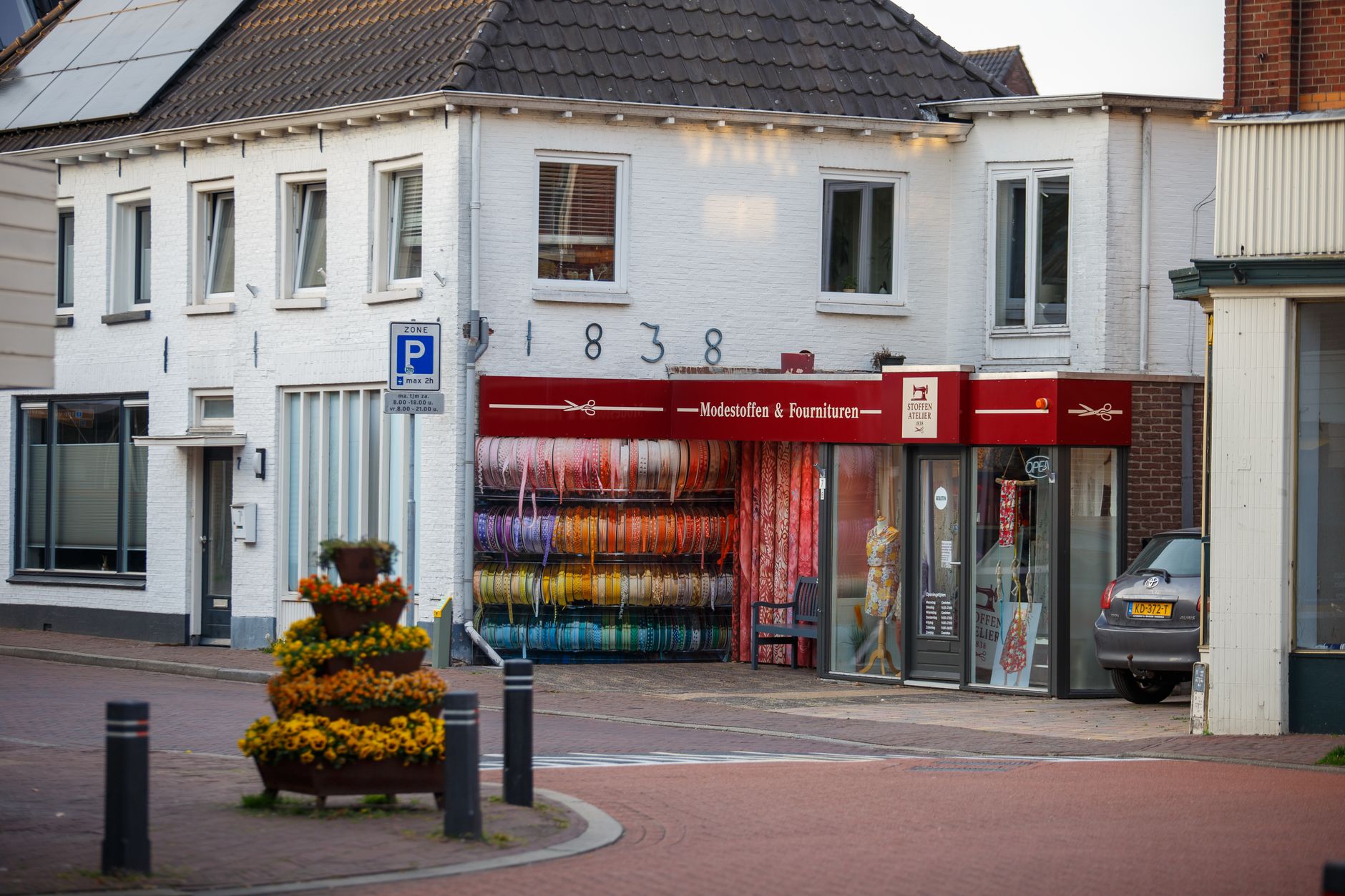 Rolls of fabric and remnant baskets on trestle tables along Breedstraat, Utrecht
What to expect at Lapjesmarkt, Breedstraat
The Lapjesmarkt is a small miracle of continuity: a fabric market that has run on Breedstraat on Saturday mornings since the nineteenth century, in a city that has rebuilt almost everything around it. Lapjes means remnants, and remnants are the heart of it — end-of-roll cottons, jersey, corduroy, oilcloth, lining silk and curtain fabric sold by the metre or heaped in baskets by the piece. Around the cloth sit the ancillary trades that make sewing possible: buttons by the jar, zips, elastic, ribbon, wool and haberdashery odds and ends. It is a working market for people who actually make things, and in a city increasingly interested in repairing and remaking rather than replacing, it has quietly become fashionable again with a younger crowd who arrive with patterns in their phones and leave with two metres of something.
The market occupies a single straight street a few minutes north-east of the cathedral, and a full walk from one end to the other takes ten minutes at browsing pace. Trestle tables run along both sides under awnings; behind them stand traders who have often held the same pitch for decades and can tell you the fibre content of a cloth by feel. You are expected to touch, unroll, hold fabric to the light and ask for a cut. Remnant baskets are where the bargains sit, often a euro or two for a piece big enough for a cushion or a child's dress. Interspersed are stalls of wool, sewing notions, second-hand linens, and occasionally vintage clothing. Coffee comes from the small cafes at either end rather than the market itself, and the mood is chatty rather than frantic.
Plan around the clock, because this market is short. Traders are set up by 8:00 and start packing from around 12:30, with the street cleared by 13:00. The best hour is 9:00 to 10:30: full tables, no crowd, and traders with time to advise on what will drape and what will not. Bring a tape measure, a note of the width you need, and a bag; fabric is heavy and slippery. If you sew, bring a swatch or a photo of the garment or cushion you are matching, since colour matching from memory in daylight is unreliable. Nothing is bookable and there is no ticket. Cash remains genuinely useful here — most traders now take cards, but the smallest remnant pitches still work in coins and notes.
Getting there from the centre of Utrecht is a walk. From Utrecht Centraal it is about ten to twelve minutes on foot: head east through Hoog Catharijne to Vredenburg, then along Lange Viestraat and Voorstraat, turning right into Breedstraat. From Domplein it is six minutes north. City buses stop at Janskerkhof and Neude, both a four-minute walk away, and both are served from Utrecht Centraal in a few minutes; a single fare on the city network is a few euros with an OV-chipkaart or contactless bank card. Cyclists can leave bikes in the racks on Wittevrouwenstraat, sixty seconds away. Drivers should not try: this is a narrow street inside the low-traffic centre, and the nearest garages such as Paardenveld or Springweg charge roughly €4-5 an hour. The P+R sites on the ring, with onward public transport included, are far cheaper.
There is no admission cost, and spending is entirely up to you. Remnants in the baskets typically start at €1-3 a piece; decent cotton by the metre runs roughly €5-12 depending on quality, with jersey and better dressmaking cloth higher and oilcloth or upholstery fabric higher still. Buttons go for cents apiece or a couple of euros for a jar, and balls of wool sit in the €3-7 range. Nobody charges for cutting. Coffee from the cafes at the Voorstraat end is around €3, and a broodje from a nearby bakery €4-6. If you are travelling home by plane, remember that fabric is light but bulky; a metre or two packs flat in a case, a bolt does not. Budget €10-25 for a genuinely useful haul.
Saturday morning is the only option, so the real timing question is which Saturday. Spring and autumn are best: comfortable browsing weather, full tables and traders bringing new stock. Summer Saturdays are hot, crowded with day-trippers spilling up from the centre, and the good remnants disappear early. Deep winter has fewer traders and shorter tempers in the rain, though the awnings hold up and the market rarely cancels outright. Around Kings Day and public holidays the market may not run, and the street can be affected by city events. If you want the calmest possible visit, arrive at 8:30 in late September; if you want the fullest choice of end-of-roll cloth, come in March or October when traders clear seasonal stock.
It suits makers, obviously — anyone who sews, quilts, upholsters, knits or repairs will lose an hour happily. It also suits curious travellers who want to see a genuinely unstaged piece of Utrecht life, and it is one of the few central attractions that costs nothing and takes under an hour. The street is flat and paved, so wheelchair and pram access is fine, though the stall aisles narrow when busy after 11:00. Children get bored quickly unless they are given a budget for a remnant and a jar of buttons to rummage in. Teenagers who like thrift and upcycling do surprisingly well. Anyone hoping for food stalls, souvenirs or a picturesque canal-side market should walk on to Vredenburg or Janskerkhof instead — this market sells cloth, and almost nothing else.
Nearby, the rest of Saturday morning arranges itself neatly. The Vredenburg market is a seven-minute walk west, the Janskerkhof flower market four minutes south, and both run the same hours, so the three together make a complete market circuit of under two hours. Voorstraat and Wittevrouwenstraat, immediately around the corner, hold Utrecht's best cluster of independent shops, secondhand bookshops and neighbourhood cafes. Domtoren and DOMunder are six minutes south, the Oudegracht wharf cellars five minutes west, and Museum Catharijneconvent about ten minutes away. It is also an easy start point for a walk out to the Wittevrouwen and Vogelenbuurt streets, where the city stops performing for visitors altogether.
The honest caveats are simple. It is small: one street, roughly forty to sixty stalls depending on the week and the weather, and if fabric bores you it is a ten-minute curiosity rather than an attraction. Quality varies wildly, from lovely Italian remnants to synthetic curtain lining, and there are no returns, so check for flaws by unrolling. The word market attracts people expecting food and crafts, and they leave disappointed within minutes. It ends at 13:00 sharp and no amount of guidebook optimism will change that — arriving at 12:45 means watching vans load. Finally, English is spoken but not always fluently at the older pitches; pointing, gesturing and a tape measure work perfectly well, and the traders are patient with anyone who is genuinely interested.
Questions about Lapjesmarkt, Breedstraat
There is no entry fee at all; the market is a public street and browsing is free. Costs are only what you buy. Remnants in the baskets start around €1-3 a piece, cotton by the metre is roughly €5-12 depending on quality, dressmaking jersey and upholstery fabric cost more, wool sits around €3-7 a ball and buttons go for cents. Cutting is never charged for. A useful haul for a sewing project usually lands between €10 and €25.
The market is free whenever it is open, so there is no discounted window, but there is a practical equivalent: traders discount remnants and end-of-roll cloth as they approach packing-up time. From about 12:00 you can often negotiate a lower price on a piece a trader would rather not carry home. The trade-off is that the best stock and the widest choice have gone by then, so the bargain window and the good-choice window are opposite ends of the same morning.
About 45 minutes for most people. A straight walk down Breedstraat and back takes ten minutes; add rummaging in remnant baskets, comparing weights of cloth and waiting for a cut and you reach three quarters of an hour. Dedicated sewers routinely spend 90 minutes. If you are treating it as one stop on a market circuit with Vredenburg and Janskerkhof, allow around two hours for all three, all within a ten-minute walk of each other.
Every day except Saturday. The Lapjesmarkt trades Saturday mornings only, roughly 8:00 to 13:00, with traders packing up from about 12:30. On Sunday through Friday, Breedstraat is an ordinary quiet residential street with a couple of cafes and no stalls whatsoever. Public holidays that fall on a Saturday, and major city events that close the centre, can cancel the market, and severe weather thins it, so treat a very wet winter Saturday as a gamble.
No. There is no ticket, reservation or guided-visit requirement — it is a street market, so you simply arrive. Nothing can be pre-ordered, though regular customers do ask traders to hold or bring specific cloth for the following week. If you want a guided introduction to Utrecht street markets, a few local walking-tour operators include Breedstraat on Saturday itineraries and those need booking in advance, but they are optional and add nothing you cannot see for yourself.
Utrecht Centraal is a ten- to twelve-minute walk: east through Hoog Catharijne to Vredenburg, then along Lange Viestraat and Voorstraat into Breedstraat. Closer still, city buses stop at Janskerkhof and Neude, each about four minutes on foot, and both are a few minutes from the station by bus with a contactless card or OV-chipkaart. Cyclists use the racks on Wittevrouwenstraat. Drivers should park at a ring-road P+R rather than the central Paardenveld or Springweg garages, which charge roughly €4-5 an hour.
Hotels near Lapjesmarkt, Breedstraat
Every hotel we cover in Wittevrouwen
- Stone Hotel & Hostel 2★ · 4.4/5 · 0.3 km away
- This Must Be The Place 3★ · 0.4 km away
- B&B de singel 4★ · 0.4 km away
- Obrecht Welcome 3★ · 0.5 km away
- Sunshine Suites 3★ · 0.5 km away
- Malie House 4★ · 0.9 km away
- Hotel Oorsprongpark 2★ · 3.5/5 · 1.1 km away
- Villa Cornelia Apartment 2★ · 1.2 km away
- Hotel De Admiraal 2★ · 1.2 km away
- Utrecht City Apartments Huizingalaan 3★ · 1.3 km away
- Hotel Mitland 4★ · 4.3/5 · 1.5 km away
More things to do
All things to do

From the journal
All posts Comparisons & rankings
Hotels with free parking in Utrecht, ranked
Comparisons & rankings
Hotels with free parking in Utrecht, ranked
On-street parking inside Utrecht's canal ring can pass €5 an hour and a central hotel space costs €20-30 a night, so here are 8 kinds of hotel that throw the car in for nothing — and the ride into town each one leaves you with.
 Comparisons & rankings
Best family-friendly hotels in Utrecht, ranked
Comparisons & rankings
Best family-friendly hotels in Utrecht, ranked
Utrecht's prettiest hotels are 17th-century canal houses with 40 steps and no lift, so here are 8 places-and-types that actually work with children — plus the €0-€25 attractions that justify each location.
 Comparisons & rankings
Pet-friendly hotels in Utrecht, ranked
Comparisons & rankings
Pet-friendly hotels in Utrecht, ranked
Most Utrecht hotels take dogs for €10-20 a night, but only a few give you somewhere to walk one at 07:00 — here are 7 areas and hotel types ranked on exactly that, plus the off-leash woods worth the ride.